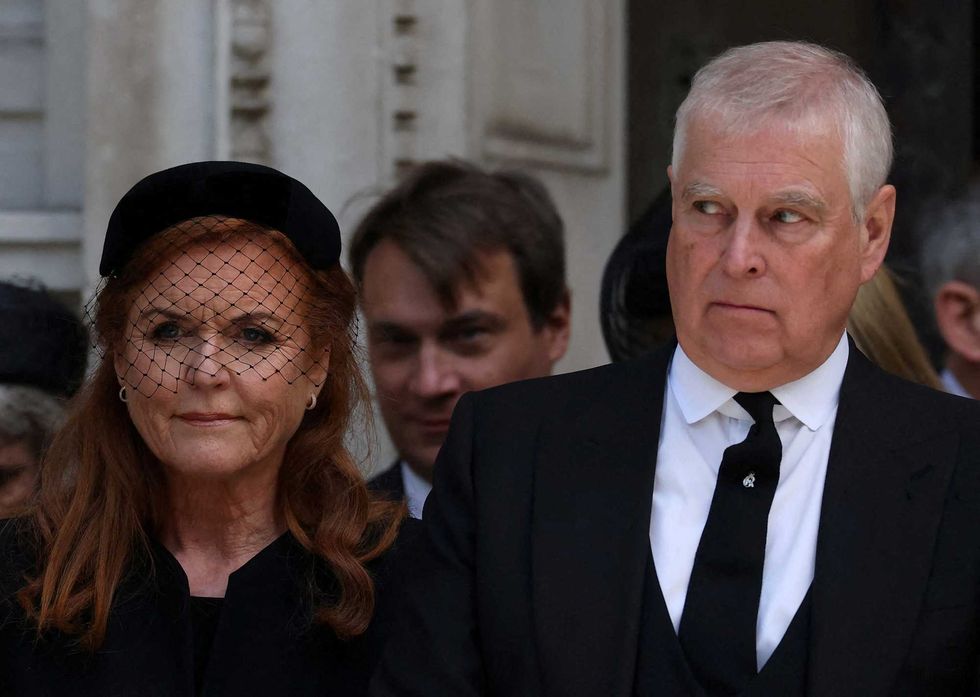
Prince Andrew, the younger brother of King Charles III, was arrested on suspicion of misconduct in public office this week over allegations that he sent confidential British government documents to disgraced financier Jeffrey Epstein.
Thames Valley Police, whose detectives questioned Andrew all day Thursday, said they are investigating claims that he passed documents to the late convicted U.S. sex offender while serving as a trade envoy.
Among the files relating to Epstein released in the United States, some suggest Andrew forwarded reports in 2010 about potential business opportunities in places he visited as the U.K.’s Special Representative for Trade and Investment.
Andrew, who turned 66 on Thursday, has denied wrongdoing in connection with Epstein. He was released from custody late Thursday as the investigation continues.
What is misconduct in public office?
Misconduct in public office is a common law offense, meaning it is not defined by statute but has developed over centuries through judges’ rulings.
A conviction carries a maximum sentence of life imprisonment. Police have said the offense involves particular complexities requiring careful assessment, without providing further details.
Britain’s top prosecutor, Stephen Parkinson, said this month that the law on misconduct in public office is “quite clear.”
The offense has largely been used against lower-ranking police and prison staff, according to research published last year by Spotlight on Corruption, a campaign group that said prosecutors may struggle with complex cases.
In one case, a former police officer was sentenced to 10 months in jail in 2013 for selling a story to The Sun and attempting to sell another to the now-defunct News of the World.
The independent Law Commission recommended in 2020 that the offense be replaced. Legislation to do so is moving through Parliament, but would not apply retroactively.
What must prosecutors prove?
Tom Frost, a law lecturer at Loughborough University, said misconduct in public office “remains a difficult offense to prove in relation to senior executives or senior political figures.”
Prosecutors must show that a defendant held public office and was acting in that capacity at the time of the alleged conduct.
Andrew’s role as trade envoy was unpaid, though it included travel and accommodations. Guidance from the Crown Prosecution Service says remuneration is not determinative in assessing public office status.
Prosecutors must also prove that a defendant willfully misconducted themselves to such a degree as to amount to an abuse of the public’s trust.
In 2003, the Court of Appeal said the bar is high, and that conduct must be more than negligent, amounting to an affront to the standing of the public office held.
The offense also requires that the conduct had no reasonable excuse or justification.
What happens next?
Given the complexity of misconduct in public office cases, police and prosecutors could take weeks or months to decide whether to bring charges.
Andrew, who has not spoken publicly since additional Epstein-related files were released, may face further questioning.
If charged, he would first appear in a magistrates’ court.
Such cases can be tried only before a judge and jury in the Crown Court, which handles serious criminal matters, likely at London’s Old Bailey.
Britain’s criminal courts face longstanding delays, with some trials scheduled years ahead. Any case involving the king’s brother, however, would likely be expedited.
Leave a Reply