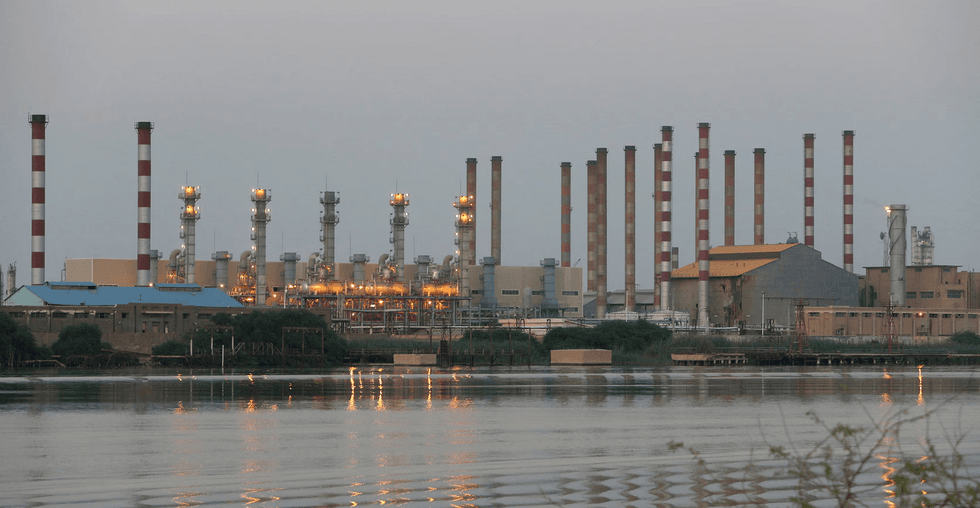
The United States imposed sanctions on a Chinese oil terminal on Friday as part of a broader package of new Iran sanctions, while warning ships against paying tolls to Tehran for passage through the Strait of Hormuz.
The measures target Qingdao Haiye Oil Terminal Co., Ltd., which the State Department said imported tens of millions of barrels of Iranian crude oil. The announcement came two weeks before Trump is due to visit China, Iran’s largest oil customer.
What did the US sanctions on the Chinese oil terminal target?
The sanctions target Qingdao Haiye Oil Terminal Co., Ltd., a petroleum terminal operator in the major maritime hub of Qingdao on the Yellow Sea.
The State Department said the terminal imported tens of millions of barrels of sanctioned Iranian crude, helping Iran generate billions of dollars in revenue. Any transactions involving the United States through the terminal operator are now criminalized under the measures.
Why is the US targeting China over Iran oil trade?
The United States has sought, since Trump’s first term, to stop all countries from buying Iranian oil. China is Iran’s largest customer, and Washington has previously sanctioned another Qingdao-area entity, Qingdao Port Haiye Dongjiakou Oil Products Co., under similar measures. The latest action intensifies pressure on Chinese buyers at a sensitive moment, with Trump scheduled to visit China within two weeks.
The State Department warned that the US would hold Iran and “all its sanctions-evading partners accountable” for oil revenues used to fund what it described as destabilizing activities. Treasury Secretary Scott Bessent said his department would “relentlessly target the regime’s ability to generate, move and repatriate funds.”
The Treasury’s Office of Foreign Assets Control also issued a separate alert warning against making payments to Iran’s government for safe passage through the Strait of Hormuz.
What are the new sanctions on Iranian currency firms?
Alongside the terminal sanctions, the Treasury Department imposed measures on three Iranian foreign currency exchange houses.
The State Department said these firms converted Iranian oil revenue into more usable currencies, helping Tehran move funds despite existing restrictions. The move forms part of a wider effort to cut off Iran’s access to international financial systems.
How do the Strait of Hormuz tolls fit in?
Iran has demanded that the United States end sanctions and its naval blockade, and has vowed to impose tolls on ships transiting the Strait of Hormuz.
Global oil prices have soared since Iran effectively blocked the strait in retaliation for the US-Israeli strikes that began on 28 February. The Treasury’s alert explicitly warned people inside and outside the United States about the sanctions risks of paying those tolls to Iran’s government.
The broader diplomatic context remains frozen. Trump halted US-Israeli attacks against Iran, but no substantive progress has followed. Iran has maintained its stranglehold on the strait, choking major flows of oil, gas and fertilizer, while the US counter-blockade on Iranian ports remains in place.
Leave a Reply