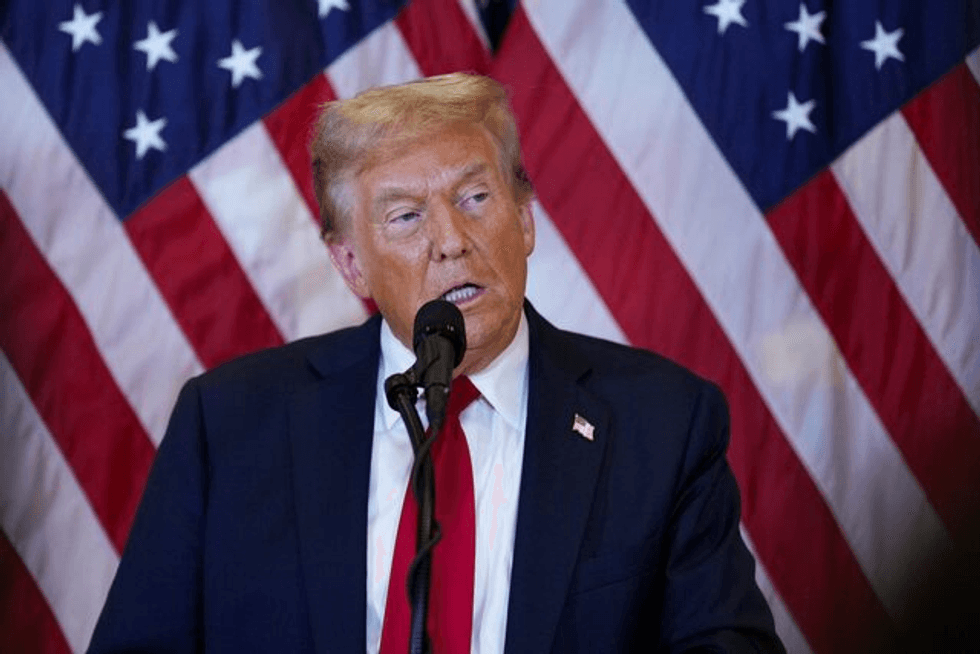
US President Donald Trump told congressional leaders on Friday that hostilities with Iran “have terminated,” invoking the move to sidestep a War Powers Act deadline requiring congressional authorization for the war.
The declaration came despite no change in US military posture and a frozen negotiating process, with Trump also saying he was “not satisfied” with a new Iranian proposal submitted through mediator Pakistan.
What does Trump’s “hostilities terminated” declaration mean for Congress?
Trump’s letter argues that the ceasefire, in place since 8 April, effectively paused the 60-day War Powers Act clock, meaning congressional authorization is no longer required. Democrats dispute this interpretation.
The White House has not announced any change in military posture, and US forces remain deployed in the region.
What is Iran offering in the new peace proposal?
Iran delivered a draft proposal to mediator Pakistan on Thursday evening, according to the IRNA news agency, which did not detail its contents.
News site Axios reported that US envoy Steve Witkoff had submitted amendments placing Iran’s nuclear program back on the negotiating table. The reported changes include demands that Iran not move enriched uranium from bombed sites or resume activity there during talks.
Trump told reporters he would “prefer not” to resume strikes “on a human basis,” but blamed stalled talks on “tremendous discord” within Iran’s leadership. The ceasefire has held since 8 April, with only one failed round of direct talks since the war began. Tehran resident Amir told AFP the stalemate “feels like we are stuck in purgatory,” predicting the US and Israel “will attack again.”
What is happening at the Strait of Hormuz?
Iran has maintained its stranglehold on the Strait of Hormuz, choking off major flows of oil, gas and fertilizer, while the United States has imposed a counter-blockade on Iranian ports. News of the Iranian proposal briefly pushed oil prices down nearly five percent, though they remain around 50 percent above pre-war levels. The US military says its blockade has stopped $6 billion in Iranian oil exports.
France and Britain have led efforts to assemble a coalition to reopen the strait once peace is secured. A US official said Washington is also launching its own coalition to restart shipping.
French Foreign Minister Jean-Noel Barrot said the US mission would “complement” European initiatives rather than replace them.
How is the war affecting Iran’s economy?
Washington imposed new sanctions on three Iranian currency firms and warned others against paying a toll for safe passage through Hormuz. Inflation inside Iran has surged past 50 percent, with residents reporting severe hardship.
“For many people, paying rent and even buying food has become difficult, and some have nothing left at all,” 28-year-old Mahyar told an AFP reporter based outside Iran.
Supreme Leader Ayatollah Mojtaba Khamenei urged businesses on Friday to avoid layoffs while threatening Iran’s enemies with “economic and cultural jihad.” Iran’s judiciary chief Gholamhossein Mohseni Ejei said his country had “never shied away from negotiations,” but would not accept the imposition of peace terms.
What else is happening across the region?
The Pentagon announced it would withdraw around 5,000 troops from Germany over the next year, following German Chancellor Friedrich Merz’s comment that Iran was “humiliating” Washington at the negotiating table.
The USS Gerald R. Ford aircraft carrier has left the Middle East after taking part in operations against Iran, though two other carriers remain. Washington also approved major arms sales to regional allies late Friday, including a $4 billion Patriot missile deal with Qatar and nearly $1 billion in precision weapons to Israel.
On the Lebanese front, Israel continued deadly strikes despite a mid-April ceasefire with Iran-backed group Hezbollah. Lebanon’s health ministry said 13 people were killed in strikes in the south, including in the town of Habboush, where the Israeli army had issued an evacuation order shortly before the attack. Fourteen members of Iran’s Revolutionary Guards were also reportedly killed defusing unexploded cluster bombs and aerial mines in northwestern Zanjan province.
Leave a Reply