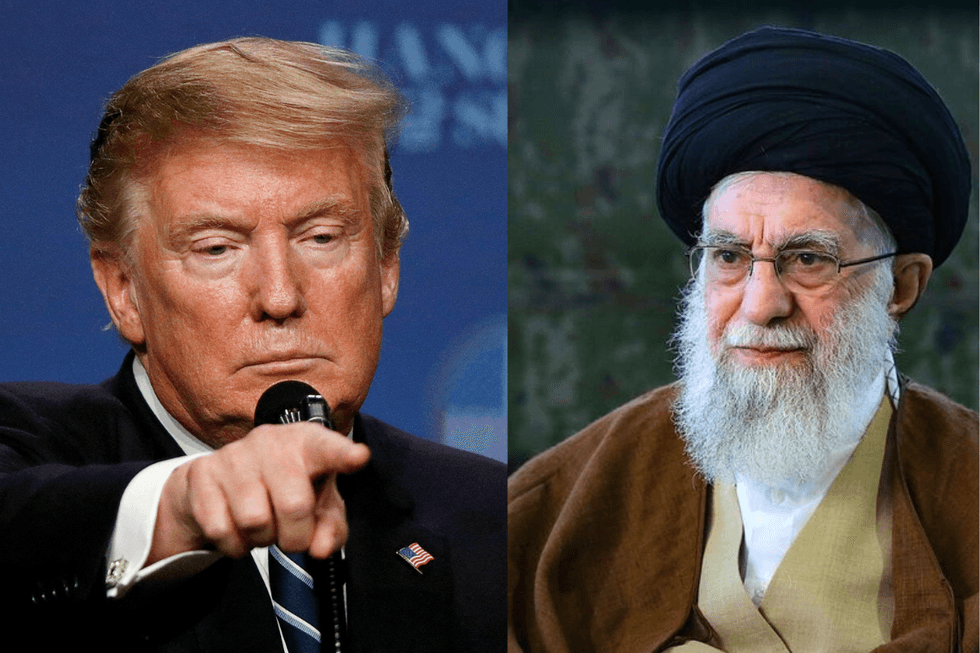
Iranian Supreme Leader Ayatollah Ali Khamenei is dead, U.S. President Donald Trump said on Saturday.
“Khamenei, one of the most evil people in History, is dead,” Trump said on Truth Social, without elaborating on the source of the information.
The United States and Israel carried out military strikes on Iran on Saturday, targeting its top leaders and plunging the Middle East into a conflict that President Donald Trump said would end a security threat to the U.S. and give Iranians a chance to topple their rulers.
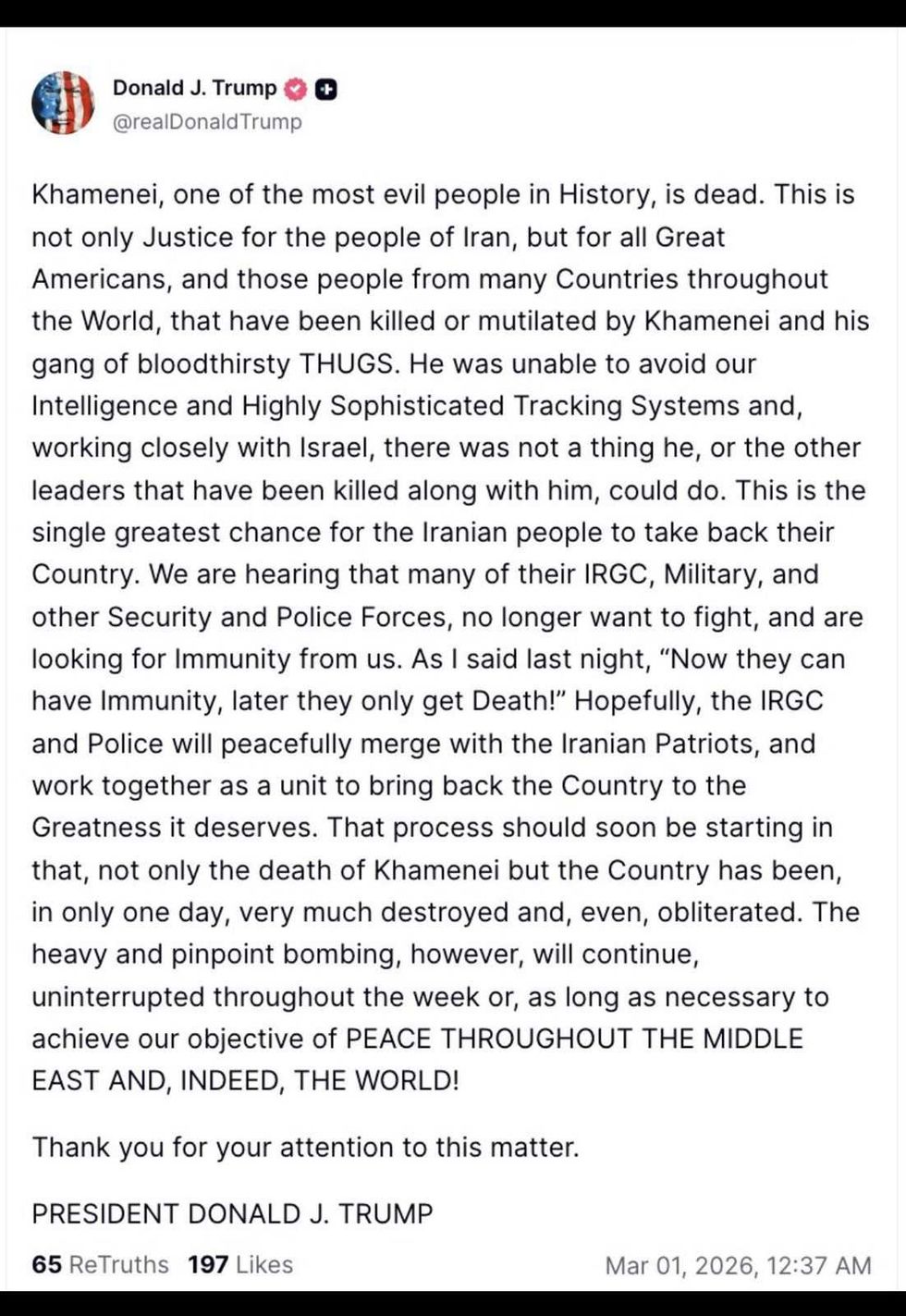
Trump’s Truth Social post came shortly after conflicting reports surfaced of the Iranian Supreme Leader’s death from Israel and Iran.
Khamenei’s body has been found, a senior Israeli official told Reuters. However, Iran’s Tasnim and Mehr News agencies reported Khamenei was ‘steadfast and firm in commanding the field’. Iran dismissed Israeli reports as ‘psychological warfare’.
U.S. President Donald Trump, who made the biggest foreign-policy gamble of his presidency after campaigning for reelection as a “peace president”, said today’s strikes were aimed at ending a decades-long threat from Iran and ensuring it could not develop a nuclear weapon.
The strikes came amid renewed diplomatic engagement between Iran and U.S. on the former’s nuclear enrichment program. A second round of talks was held just two days ago in Geneva.
Trump called on Iranian security forces to lay down their weapons and invited Iranians to topple their government once the bombing ended.
Israel has also confirmed the deaths of Iranian Defence Minister Amir Nasirzadeh and Revolutionary Guards commander Mohammed Pakpour. Iranian media said Khamenei’s son-in-law and daughter-in-law have also been killed.
Iran has confirmed 201 fatalities, including scores of girls who were killed in Israeli strikes on an elementary school in Iran’s city of Minab. At least 747 people are said to have been injured so far.
Missiles fired at Arab Gulf states
Iran’s Revolutionary Guards said all U.S. bases and interests in the region were within Iran’s reach and that Iran’s retaliation would continue until “the enemy is decisively defeated”. Iraq’s Iran-aligned armed group Kataib Hezbollah said it would soon attack U.S. bases in the region.
Loud booms sounded in Abu Dhabi, capital of the United Arab Emirates, an oil producer and close U.S. ally, and several blasts were heard in the business capital, Dubai.
Bahrain said the service center of the U.S. Fifth Fleet – base for American naval forces in the region – had been subjected to a missile attack. Video footage showed a thick grey plume of smoke rising from near the island state’s coastline as sirens wailed.
Qatar said it had downed all missiles targeting the country and that it had the right to respond. Kuwait confirmed a missile attack on a U.S. military base there.
The renewed confrontation dimmed hopes of a diplomatic solution to Tehran’s nuclear dispute with the West. Oil markets have been closely watching the standoff between Washington and Tehran to try and determine if supplies will be impacted.
“If we don’t see signs of de-escalation over the weekend, risk premiums could still drive Brent up” by $10–$20 per barrel when markets reopen on Monday, said Jorge Leon, head of geopolitical analysis at Rystad Energy.
Iran, the third largest producer in the Organization of the Petroleum Exporting Countries, pumps about 4.5% of global oil supplies, and a far larger share is shipped past its coast through the strait leading out of the Gulf.
‘No ship to pass through Strait of Hormuz’
An official from the European Union’s naval mission Aspides said on Saturday that vessels have been receiving VHF transmission from Iran’s Revolutionary Guards saying “no ship is allowed to pass the Strait of Hormuz”.
The Strait is the world’s most vital oil export route, which connects the biggest Gulf oil producers, such as Saudi Arabia, Iran, Iraq and the United Arab Emirates, with the Gulf of Oman and the Arabian Sea.
The official, who spoke to Reuters on condition of anonymity, said Iran had not formally confirmed any such order. Tehran has for years threatened to block the narrow waterway in retaliation for any attack on the Islamic Republic.
Leave a Reply