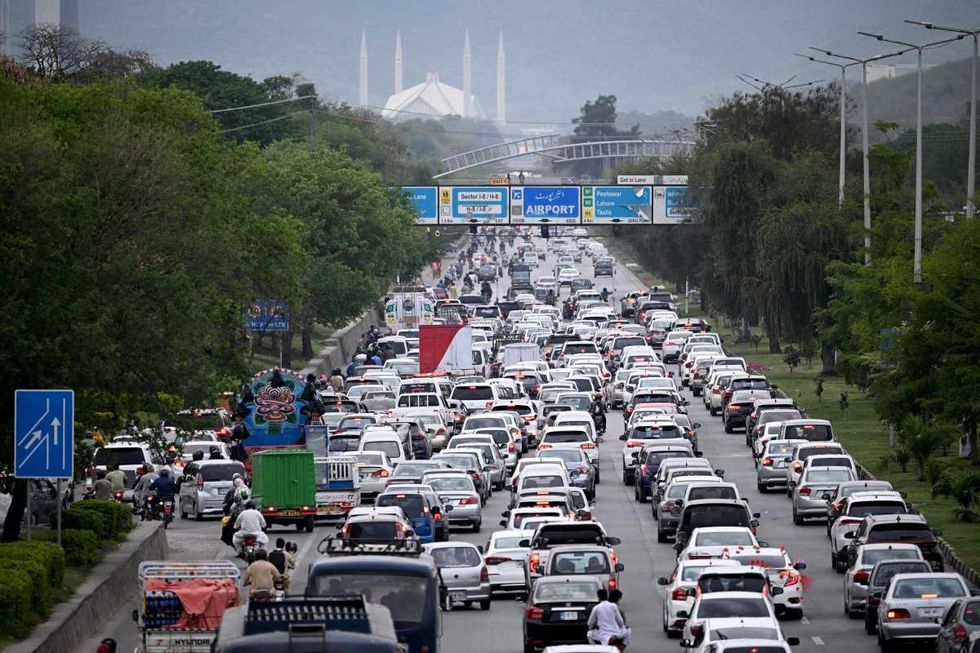
Authorities in Pakistan have suspended transport services in the neighboring cities of Rawalpindi and Islamabad, citing security concerns, officials said.
In Rawalpindi, all forms of transport — including private vehicles, public transit and goods carriers — have been halted until further notice. Officials said updates would be shared as the situation develops.
In Islamabad, Pakistan’s capital, authorities have also imposed restrictions on public transport and heavy vehicles. These services will remain suspended until further notice, according to the district administration.
Residents have been urged to cooperate with security agencies and adjust travel plans. Officials said the measures were taken in the interest of public safety.
Measures coincide with US-Iran diplomacy in Pakistan
The restrictions come as Pakistan hosts diplomatic efforts between the United States and Iran. A first round of talks held earlier this month in Islamabad ended without an agreement.
U.S. President Donald Trump said Friday that progress had been made toward a potential deal, referring to developments involving Iran’s nuclear program and the Strait of Hormuz, a key global oil shipping route.
In a series of social media posts, Trump described the moment as a “GREAT AND BRILLIANT DAY FOR THE WORLD!” but did not confirm a final agreement.
He said Iran had agreed not to close the Strait of Hormuz and claimed Tehran was removing sea mines from the waterway with U.S. support.
Trump also praised Pakistan’s role in facilitating the talks, thanking Prime Minister Shehbaz Sharif and army chief Asim Munir.
Key differences remain as ceasefire deadline approaches
Despite the positive signals, recent talks led by U.S. Vice President JD Vance in Pakistan ended without a deal.
Trump has suggested that a breakthrough could be close and said he may travel to Pakistan to sign a future agreement.
He also rejected reports that the United States was considering a $20 billion cash-for-uranium arrangement, saying no money would be exchanged.
Meanwhile, tensions remain high. Iran has kept the Strait of Hormuz closed, a move that affects a critical route for global energy supplies.
Iranian officials said the waterway would not reopen unless the United States lifts a blockade on Iranian ports.
Parliament Speaker Mohammad Bagher Ghalibaf said there had been “progress” in negotiations but warned that major differences remain.
“We are still far from the final discussion,” he said in a televised address.
A two-week ceasefire linked to the ongoing conflict is due to expire on Wednesday unless extended.
Leave a Reply