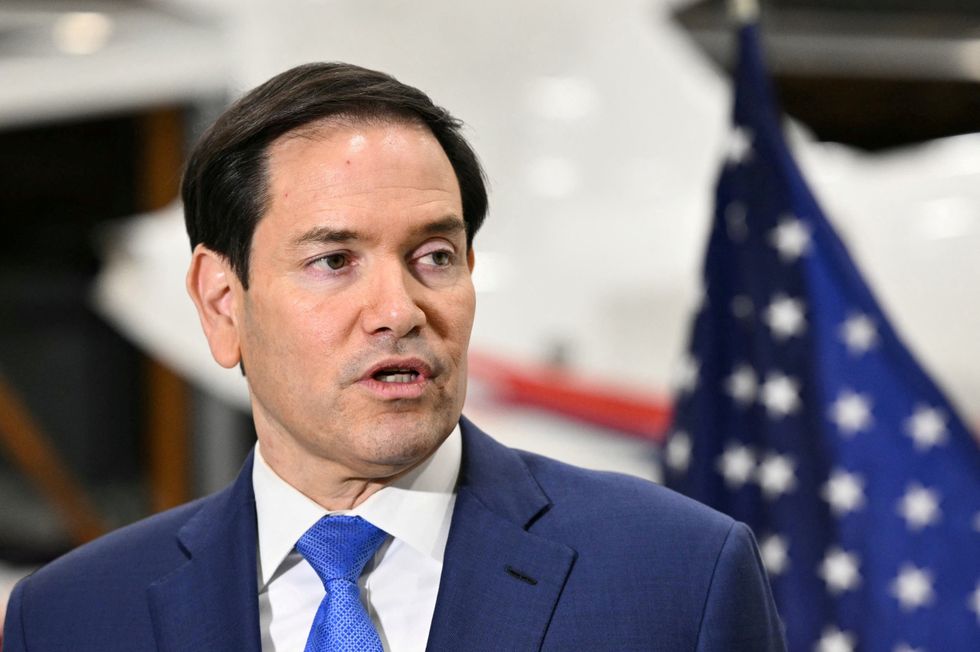
U.S. Secretary of State Marco Rubio plans to skip next week’s meeting of NATO foreign ministers in Brussels, two U.S. officials said Thursday, marking an unusual absence by Washington’s top diplomat from a major transatlantic gathering.
Deputy Secretary of State Christopher Landau is expected to attend instead, one official said, speaking on condition of anonymity because the plans are not yet public.
It was unclear why Rubio intends to miss the Dec. 3 meeting, and the situation could still change. But his likely absence comes as U.S. and Ukrainian officials try to narrow divisions over President Donald Trump’s proposal to end Russia’s invasion of Ukraine, with some European diplomats complaining they are being sidelined.
NATO typically holds two formal foreign ministers’ meetings a year, and U.S. secretaries of state rarely skip them. In 2017, then, Secretary of State Rex Tillerson initially planned to miss an April session, before the gathering was rescheduled to fit his calendar.
State Department defends Rubio’s schedule
A State Department spokesperson declined to address Rubio’s potential absence directly but said the NATO alliance had been “completely revitalized” under the Trump administration. The spokesperson noted Rubio recently met several European officials in Switzerland.
“Secretary Rubio also meets with and talks to NATO allies regularly, including last weekend in Geneva,” the spokesperson said.
A senior State Department official added that Rubio participates in enough high-level talks. “It would be completely impractical to expect him at every meeting,” the official said.
A NATO official referenced Washington for comment on Rubio’s attendance but said it is not unusual for some ministers to miss the gathering.
Ukrainian and European officials have been wary of being pushed into accepting a peace plan seen as too favorable to Russia, concerns that intensified after a draft 28-point proposal was leaked on Nov. 18.
Rubio’s expected absence risks deepening questions about the U.S. commitment to European security, which has faced strain in recent years. Washington remains NATO’s de facto leader, but Trump has repeatedly cast doubt on the alliance’s necessity and suggested at times the United States might withdraw.
Landau, who will represent the United States in Brussels, questioned the need for NATO in a June post on X that he later deleted.
Ukraine faces heightened uncertainty
The meeting comes at a tense moment for Ukraine. In addition to uncertainty over peace talks, Ukrainian President Volodymyr Zelenskiy’s chief of staff, Andriy Yermak, resigned Friday, hours after anti-corruption agents searched his home.
Trump reaffirmed his support for NATO at a June summit seen as a diplomatic success, but he has maintained pressure on allies to increase defense spending, saying the United States will no longer “bail them out.”
If you want, I can produce a shorter wire version or a sidebar on U.S.–Europe tensions.
Leave a Reply