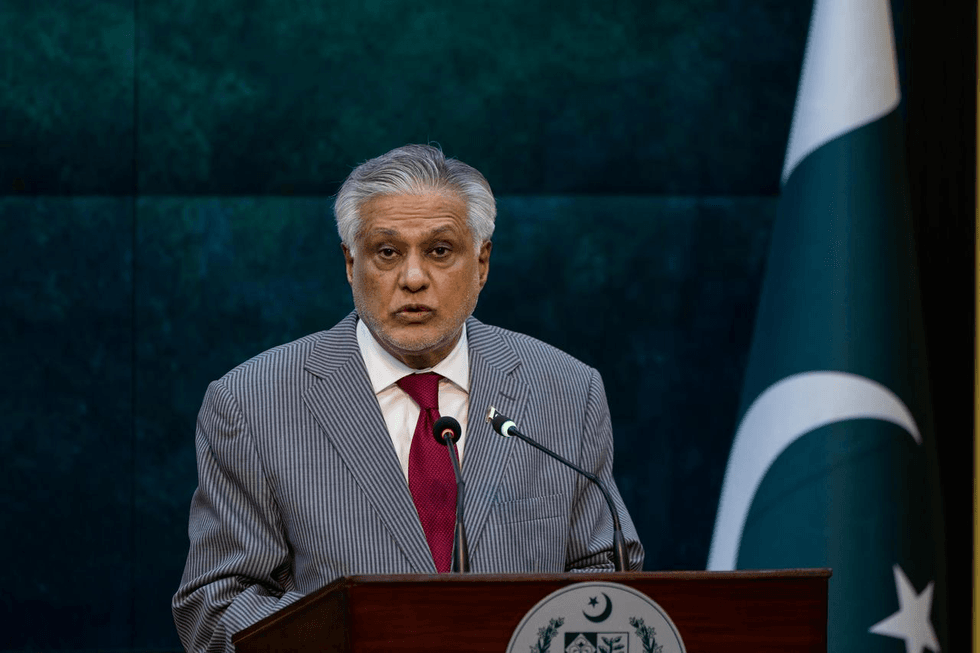
Pakistan said on Saturday the United Arab Emirates is set to acquire shares in the Fauji Foundation as part of expanding economic cooperation between the two countries, a move Islamabad hopes will ease external financing pressures and strengthen foreign exchange buffers.
Deputy Prime Minister and Foreign Minister Ishaq Dar said the proposed transaction would help retire a $1 billion liability, while an additional $2 billion loan from the UAE is expected to be rolled over, supporting Pakistan’s near-term balance-of-payments position.
Dar said the “transaction is expected to be completed by March 31, 2026”.
Speaking at a press conference reviewing the Foreign Ministry’s annual performance, Dar said the investment reflected growing confidence among Gulf partners in Pakistan’s economic stabilization efforts, backed by International Monetary Fund reforms.
Pakistan has relied heavily on loan rollovers, sovereign deposits and investment-linked financing from partners including the UAE, Saudi Arabia and China to manage external obligations amid tight global financial conditions. Officials say asset monetization, foreign investment and diplomatic engagement remain central to sustaining economic stability.
Pakistan ready to join Gaza force under limited mandate
On regional diplomacy, Dar said Pakistan is willing to participate in a proposed Gaza peacekeeping force, provided its mandate is restricted to peacekeeping and does not involve peace enforcement or disarmament of Hamas.
“We are not willing to participate in any mission aimed at peace enforcement or disarming Hamas,” he said, emphasizing Pakistan’s position on maintaining a neutral peacekeeping role.
Dar also confirmed that Pakistan held talks with the Taliban in Saudi Arabia, which, like previous discussions in Qatar and Turkey, failed to reach any significant conclusions. He reiterated Pakistan’s continued support for dialogue as a means of addressing regional challenges.
Regional tensions and India dispute
Shifting to regional security, Dar accused India of committing a “grave mistake” by attacking the Nur Khan air base during the recent four-day conflict, saying Pakistan’s armed forces responded decisively while avoiding escalation.
He said Pakistan had consistently conveyed to the international community that it would not initiate hostilities but would retaliate if provoked, dismissing what he described as Indian “false narratives” during the confrontation.
Dar said Pakistan maintained close contact with more than 60 countries during the crisis and credited diplomatic engagement – including efforts by the United States and Saudi Arabia – with helping facilitate a ceasefire.
Diplomacy and global outreach
Dar said Pakistan’s diplomatic standing had improved significantly over the past year, contrasting it with what he described as isolation when the current government took office. He cited renewed international engagement on Kashmir, discussions on the Indus Waters Treaty at multilateral forums, and expanded ties with regional partners.
He pointed to improved relations with Bangladesh after years of limited contact, growing engagement with Turkey and what he described as strengthened ties with Washington in areas including trade, investment and counterterrorism.
Pakistan’s relationship with China, Dar said, remained a cornerstone of its foreign policy, adding that cooperation with Beijing was not at the expense of ties with other countries.
He concluded by saying Pakistan’s foreign policy over the past year had focused on economic diplomacy, regional stability and restoring international confidence.
Leave a Reply