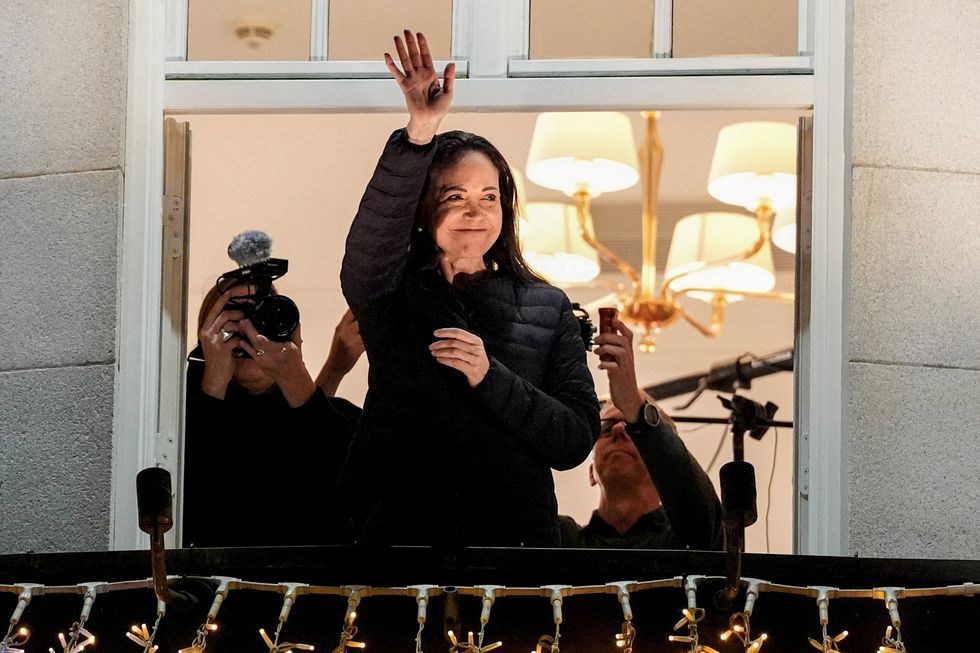
Nobel Peace Prize laureate Maria Corina Machado slipped quietly into Oslo before dawn on Thursday after a clandestine journey out of Venezuela, arriving too late to attend the award ceremony held hours earlier but in time to meet supporters and family who had gathered anxiously in the city.
The 58-year-old opposition leader, long barred from travel by Venezuelan authorities, secretly left the country earlier in the week after more than a year in hiding.
Her arrival was confirmed by Nobel committee chief Joergen Watne Frydnes, who addressed well-wishers in the lobby of the Grand Hotel, where laureates traditionally stay during Nobel week.
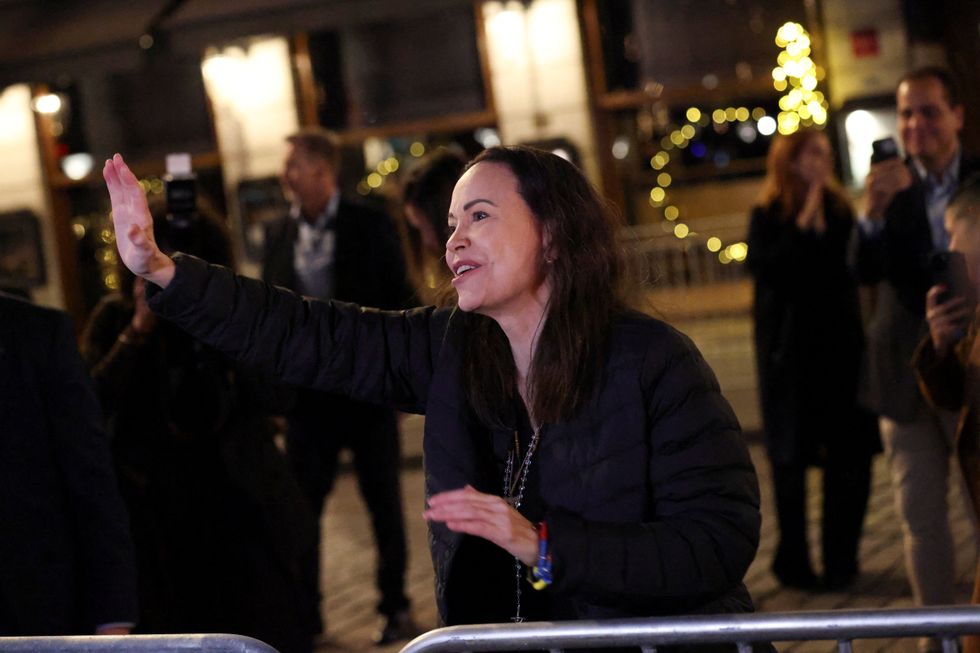
“I can confirm that Maria Corina Machado has arrived in Oslo,” Frydnes said. “She is on her way here, but she will go straight to meet her family. We’ll see you all tomorrow.”
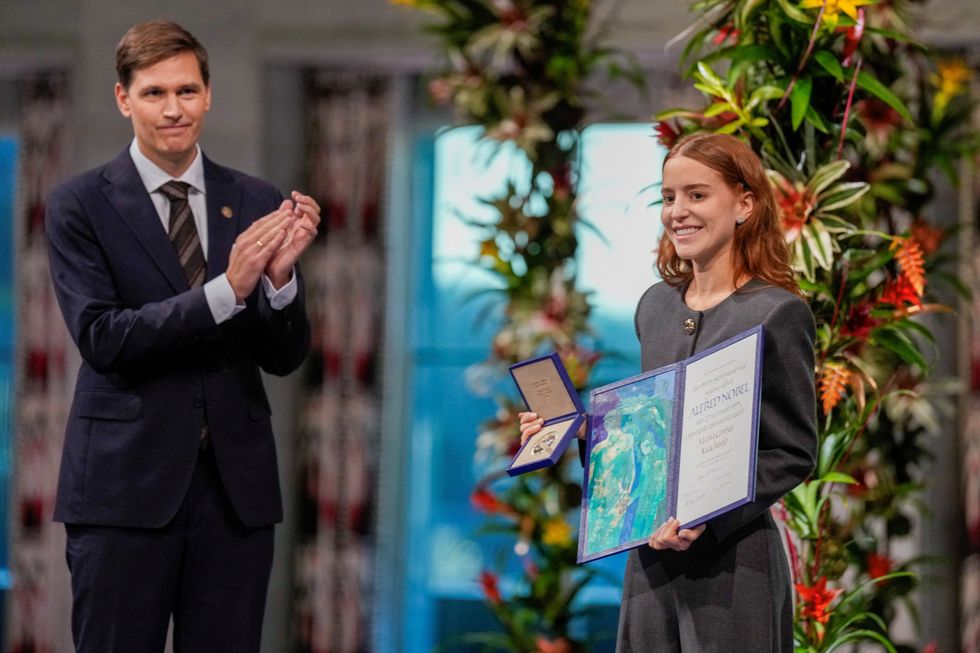
Machado’s late-night arrival capped an escape that underscored the personal risks she has taken as the most prominent opponent of President Nicolas Maduro. Her daughter, Ana Corina Sosa Machado, accepted the prize on her behalf and read her prepared remarks to an emotional audience in Oslo City Hall.
Secret departure
Machado fled Venezuela by boat on Tuesday under the protection of her security team, according to a person familiar with the operation. From the Venezuelan coast, she reached the nearby island of Curaçao, where she boarded a private plane bound for Norway. The White House declined to comment on the account of her journey, initially reported by the Wall Street Journal.
The daring escape reflected the exceptional constraints Machado has faced since Venezuelan courts blocked her from running in the 2024 presidential election, even after she won the opposition primary by a broad margin.
She went into hiding in August after authorities intensified arrests of opposition activists and campaign staff.
In Oslo, a large portrait of a smiling Machado was hung in City Hall to represent her during the ceremony. The audience erupted in cheers when Frydnes announced she would soon arrive in the Norwegian capital despite the travel ban. He invoked the legacy of past laureates such as Nelson Mandela and Lech Walesa, arguing that democracy advocates should not be held to impossible moral standards.
“People living under the dictatorship often have to choose between the difficult and the impossible,” Frydnes said.
Message from hiding
In her speech, Machado said the prize carried profound meaning for Venezuelans and for all who believe in democratic values. Delivered by her daughter, the address traced Venezuela’s political decline from what she described as a failure to recognize the fragility of its institutions under the late President Hugo Chávez, who took office in 1999 after having previously led a coup attempt.
“By the time we recognized how fragile our institutions had become, a man who had once led a military coup to overthrow democracy was elected president,” she wrote. “Many thought that charisma could substitute for the rule of law.”
She said Venezuelans now lived in a country where democratic norms had been dismantled step by step. “From 1999 onward, the regime dismantled our democracy,” Machado said, adding that the prize served as a reminder that democracy cannot survive without those willing to defend it.
‘A choice that must be renewed each day’
Machado’s message stressed that freedom demands constant vigilance. “Freedom is a choice that must be renewed each day, measured by our willingness and our courage to defend it,” she wrote. “For this reason, the cause of Venezuela transcends our borders. People who choose freedom contribute not only to themselves, but to humanity.”
Her remarks resonated amid ongoing disputes over the legitimacy of Venezuela’s 2024 presidential election.
Although the electoral authority and top court declared Maduro the winner, the opposition says its candidate prevailed and has published detailed tallies to support the claim. International observers have raised concerns about irregularities.
Maduro rejects accusations
Maduro has long accused the United States of attempting to topple him in pursuit of Venezuela’s oil reserves, and he frequently cites former President Donald Trump as the architect of such efforts.
Venezuelan officials insist the country’s institutions remain intact and accuse opposition leaders of collaborating with foreign powers to destabilize the state.
Machado’s relationship with Washington has drawn scrutiny. When she was named the Nobel Peace Prize winner in October, she dedicated the honor in part to Trump, who has repeatedly asserted—without evidence—that he deserved to win the prize himself.
She has aligned herself with hard-line voices close to Trump who claim Maduro’s government maintains ties to criminal networks that threaten U.S. security.
The U.S. intelligence community has expressed doubts about that assertion, but the Trump administration has nonetheless pursued confrontational policies, including more than 20 military strikes in recent months against alleged drug-trafficking vessels in the Caribbean and off Latin America’s Pacific coast.
Human rights groups, Democratic lawmakers, and several Latin American governments have condemned the strikes as unlawful extrajudicial killings that have resulted in civilian deaths. The administration defends its actions as necessary to curb criminal activity and keep narcotics out of the United States.
Despite the risks of returning home, Machado has vowed to continue advocating for democratic change in Venezuela. Her aides say she will remain abroad only temporarily and intends to explore ways to re-engage with supporters inside the country.
“This award is for every Venezuelan who refuses to give up,” she wrote. “It honors the courage of those who know that freedom is not granted; it is earned.”
Leave a Reply