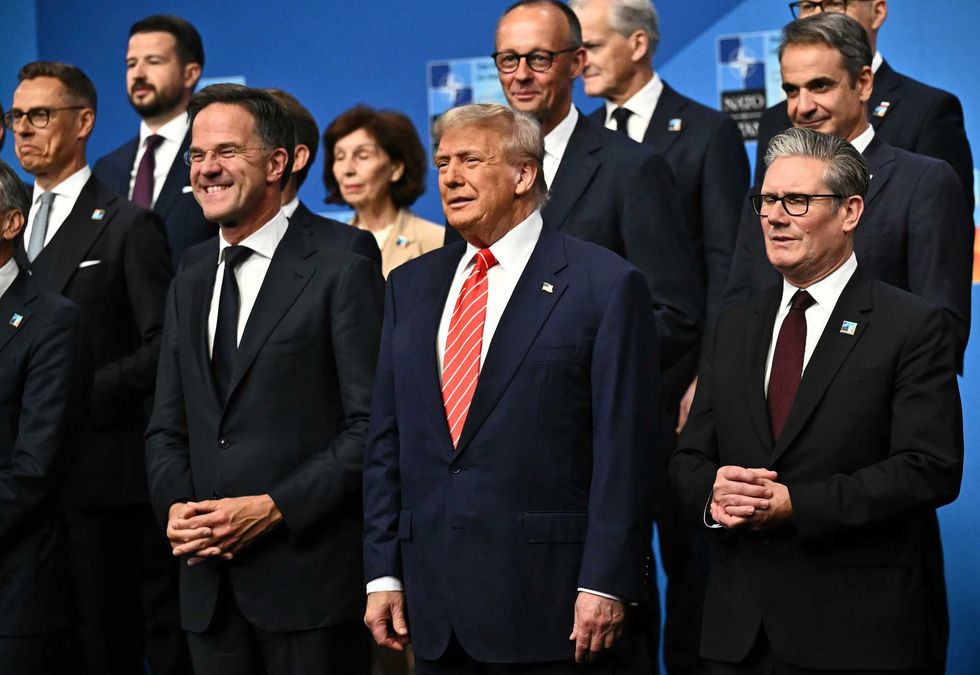
NATO said Saturday it was working with the United States to understand Washington’s decision to withdraw around 5,000 troops from Germany, as a rift deepens between the U.S. and its European allies over the Middle East war.
The Pentagon said the withdrawal is expected to be completed over the next six to 12 months.
Why is the US withdrawing troops from Germany?
The decision follows a public spat between President Donald Trump and German Chancellor Friedrich Merz, who said Iran was “humiliating” Washington at the negotiating table.
Trump responded by saying Merz “doesn’t know what he’s talking about.” Trump has used troop levels as leverage against European allies he accuses of failing to back the Middle East war or contribute to a peacekeeping force in the Strait of Hormuz, which Tehran’s forces have effectively closed.
Pentagon spokesman Sean Parnell said the withdrawal “follows a thorough review of the Department’s force posture in Europe” and reflects “theater requirements and conditions on the ground.” There were 36,436 active-duty U.S. troops in Germany as of Dec. 31, 2025, compared with 12,662 in Italy and 3,814 in Spain.
How have Germany and NATO responded to the troop withdrawal?
German Defense Minister Boris Pistorius said the withdrawal “was to be expected,” while German Foreign Minister Johann Wadephul said Berlin was “prepared” for a reduction and was discussing the matter closely within NATO bodies.
Wadephul stressed that large American bases in Germany, including Ramstein Air Base, are “not up for discussion at all,” describing Ramstein as having “an irreplaceable function for the United States and for us alike.”
NATO spokeswoman Allison Hart said the move “underscores the need for Europe to continue to invest more in defense and take on a greater share of the responsibility for our shared security.”
Could the US also pull troops from Italy and Spain?
Trump threatened Thursday to withdraw troops from Italy and Spain as well, citing their opposition to the war. “Italy has not been of any help to us, and Spain has been horrible, absolutely horrible,” he told reporters in the Oval Office.
When asked whether he would follow through, Trump said: “Yeah, probably, I probably will. Why shouldn’t I?”
What other pressure is Trump applying to European allies?
Alongside the troop withdrawal, Trump announced that tariffs on cars and trucks from the European Union will rise to 25 percent next week, accusing the bloc of failing to comply with a trade deal signed last summer.
He singled out German automakers such as Mercedes-Benz and BMW, saying Germany and “other European nations have not adhered to our trade deal.” The head of Germany’s VDA automotive lobby, Hildegard Mueller, called for “urgent” de-escalation and faster negotiations, warning of “enormous costs” to the German and European automobile industry.
What is the broader context of US-Europe tensions?
European powers have been on high alert since Russia invaded Ukraine in 2022, with a spate of drone incursions over the past year pushing defense spending to the top of the agenda.
Merz has made national security a priority, committing to unprecedented investment in Germany’s long-underfunded military and reaffirming support for Ukraine.
Trump, however, told Merz to focus on ending the Ukraine war rather than “interfering” in Iran, deepening the divide between Washington and its key European partners.
Leave a Reply