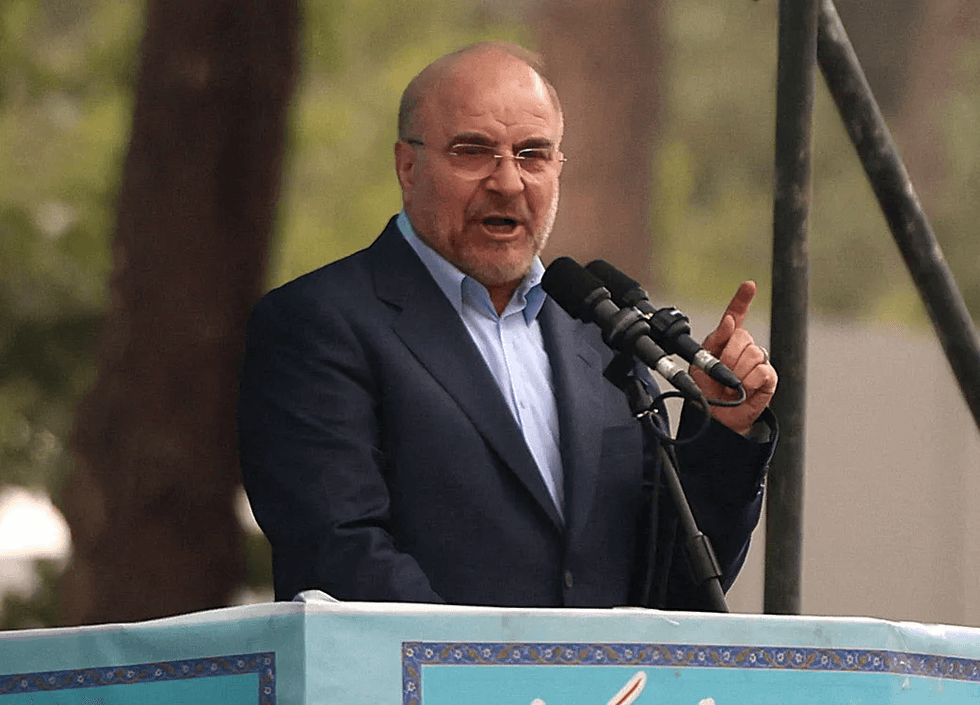
Iran’s parliament speaker Mohammad Bagher Ghalibaf said Wednesday that the U.S. naval blockade of Iranian ports was designed to create internal divisions and weaken the country from within. He accused President Donald Trump of combining economic pressure with media campaigns to force Tehran into submission.
What is the US blockade of Iran trying to achieve?
According to Ghalibaf, the U.S. blockade of Iran is not purely economic. He said Washington aims to split the country into “hardliners and moderates” while using naval pressure and media campaigns to trigger internal collapse. His remarks came as U.S.-Iran tensions escalate over Iran’s closure of the Strait of Hormuz, a critical route for global oil and gas shipments.
What did Ghalibaf say about the new phase of US pressure?
Ghalibaf said the United States had entered “a new phase” by combining the naval blockade with what he called media hype to sow discord inside Iran. “The enemy has entered a new phase and wants to activate economic pressure and internal division through naval blockade and media hype to weaken or even make us collapse from within,” he said. He added that maintaining national unity was the only solution.
Why has Ghalibaf become a key figure in Iran’s response to the US?
Ghalibaf has risen to greater prominence since the start of the Middle East war. He served as the lead negotiator in the only round of direct U.S.-Iran talks held so far, giving him a central role in how Tehran frames its public position. His statements now carry significant weight in signalling Iran’s official posture toward Washington.
Is Iran trying to negotiate with the United States?
Iran has engaged in at least one direct round of talks with the United States, led by Ghalibaf. However, the outlook for further negotiations remains uncertain. Al Jazeera reported that Iran said there would be no talks with the U.S. for the time being, casting doubt over mediation efforts by Pakistan.
What has changed inside Iran’s leadership since the strikes?
Ghalibaf’s remarks came amid wider speculation about Iran’s internal balance of power. Several Iranian leaders were killed in U.S.-Israeli strikes, including supreme leader Ali Khamenei, prompting questions about who holds authority in Tehran. Earlier this month, Trump said Iran’s government was “seriously fractured, not unexpectedly so.”
What happens if Iran closes the Strait of Hormuz?
The United States imposed its blockade on Iranian ports after Tehran closed the Strait of Hormuz, a narrow waterway through which a significant share of the world’s oil and gas passes. Iran has said reopening the strait is impossible as long as the U.S. blockade continues. A prolonged closure would disrupt global energy supplies and raise pressure on international markets.
Leave a Reply