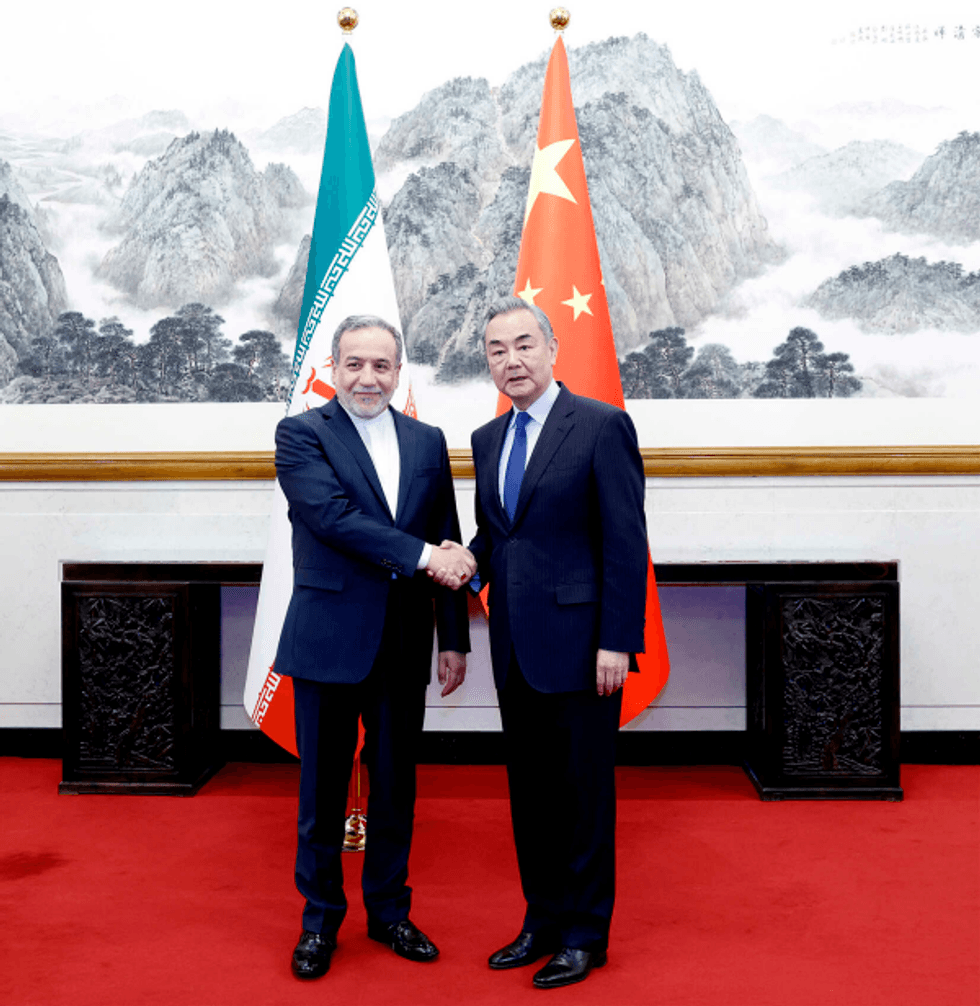
Iranian Foreign Minister Abbas Araghchi will travel to Beijing on Tuesday for talks with his Chinese counterpart Wang Yi, Iran’s foreign ministry said.
The visit comes as negotiations with the United States over ending the Middle East war remain deadlocked, with only one round of direct peace talks held so far.
Why is Iran’s foreign minister traveling to China?
Araghchi is traveling to Beijing to meet Wang Yi and discuss bilateral ties, regional developments and international issues.
The visit is part of a broader diplomatic push that has already taken him to Russia, Pakistan and Oman. It comes as Iran faces mounting US pressure and works to shore up support from key allies.
What happened in the Strait of Hormuz?
Iran’s chief negotiator, Mohammad Bagher Ghalibaf, warned Washington against further escalation in the Strait of Hormuz after a series of clashes risked reigniting the Middle East war.
The US military said its Apache and Seahawk helicopters struck six Iranian boats that were threatening commercial shipping. Its forces also repelled Iranian missiles and drones on Monday, while the UAE reported fresh Iranian attacks on its territory.
Ghalibaf, who also serves as speaker of Iran’s parliament, wrote on X that the continuation of the current situation was intolerable for the United States.
Tehran vowed not to surrender control of the strait, with Ghalibaf saying the “malign presence” of the US and its allies would diminish. Iran denied that any of its combat ships had been hit, but accused Washington of killing five civilian passengers on boats.
Despite the clashes, Denmark’s freight giant Maersk said Tuesday that one of its ships had successfully sailed through the Hormuz under US naval escort.
The passage came under Trump’s initiative called “Project Freedom”, aimed at guiding ships from neutral countries through the waterway. Iran’s military had earlier threatened to attack any US forces that entered the trade route.
How are Gulf states and Western allies responding?
The UAE condemned Iranian missile and drone strikes, including one targeting an energy facility in Fujairah, calling them a dangerous escalation and an unacceptable transgression. Saudi Arabia, a key US ally, called Tuesday for efforts to reach a political solution.
EU chief Ursula von der Leyen said the attacks were unacceptable and warned that security in the Gulf region had direct consequences for Europe.
German Chancellor Friedrich Merz urged Tehran to return to the negotiating table and stop holding the region and the world hostage.
French President Emmanuel Macron and British Prime Minister Keir Starmer made similar appeals. UAE authorities said four cruise missiles were launched, with three shot down and one falling into the sea.
Iran said it had no pre-planned program to target UAE oil facilities, but blamed US military action for provoking the strikes.
Tehran said Washington’s attempt to break its blockade of the Hormuz strait by escorting ships through what it called forbidden passages was responsible for what followed. An Iranian military official told state TV that the US military must be held accountable.
What is the broader impact of the Middle East war?
The war, which erupted more than two months ago with US-Israeli strikes on Iran, has spread across the Middle East and rattled the global economy.
Stocks fell on Tuesday after crude prices surged a day earlier, as renewed tensions raised fears about the ceasefire’s durability. Soaring energy costs have caused economic pain worldwide and created a political headache for Trump ahead of midterm elections.
Washington’s European allies have warned that the longer the Hormuz strait remains closed, the deeper the economic damage will become. The latest escalation came despite a weeks-long ceasefire that had offered a fragile pause in hostilities. With no deal in sight to reopen the strait, the standoff continues to impact hundreds of millions of people globally.
What is Israel’s position as tensions escalate?
An Israeli military official said Monday that the army remained on high alert and was monitoring the situation closely. Israel and Iran-backed Hezbollah have continued trading attacks despite a ceasefire in Lebanon.
Lebanese President Joseph Aoun said a security deal and an end to Israeli strikes were required before any meeting with Israeli Prime Minister Benjamin Netanyahu, a meeting Washington has been pushing for.
Israeli and Lebanese representatives met twice in Washington last month, the first such meetings in decades. The talks followed Hezbollah’s decision to draw Lebanon into the Middle East war on March 2, which triggered heavy Israeli strikes and a ground invasion.
The diplomatic track remains fragile as military pressure persists on multiple fronts.
Leave a Reply