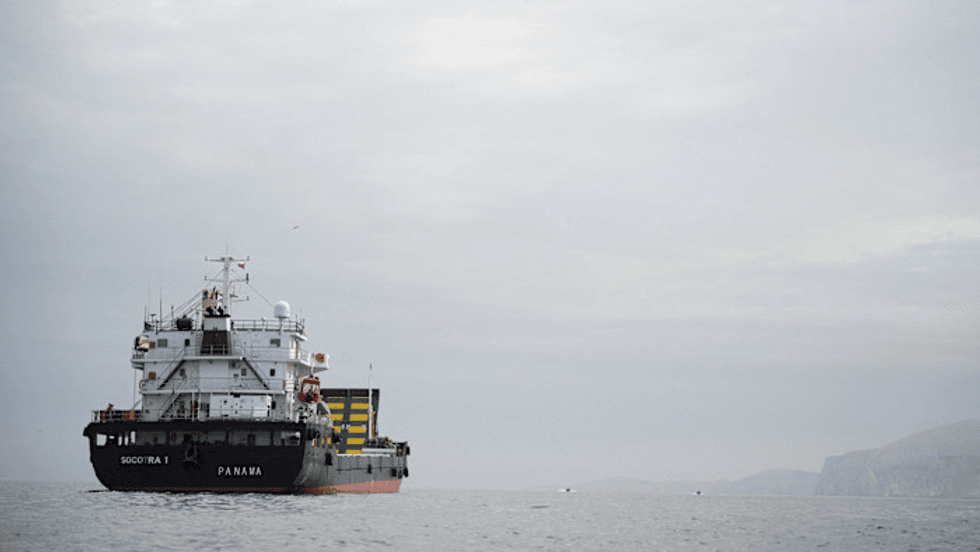
Iran’s agriculture minister said a US naval blockade has had little impact on the country’s ability to supply basic goods and food, citing strong domestic production and alternative import routes.
“Despite the US naval blockade, we have no problem in supplying basic goods and food because, due to the size of the country, it is possible to import from different borders,” Agriculture Minister Gholamreza Nouri said.
“About 85 percent of agricultural products and basic goods are produced domestically, so the country’s food security is established,” he added, according to the official IRNA news agency.
The comments come after the United States imposed a naval blockade on Iranian ports and coastal routes on April 13, shortly after a ceasefire was announced that paused its conflict with Iran. Tehran has strongly criticized the move, calling it a breach of the truce.
Earlier, US President Donald Trump extended the ceasefire to allow more time for negotiations, while asserting that Iran was “collapsing financially” under pressure from restrictions, including those on the Strait of Hormuz.
There has been no official Iranian response to the extension. However, maritime tensions persisted, with an Iranian gunboat firing on a container vessel off Oman, causing damage but no casualties, according to a British maritime security agency.
On another front, in Lebanon where a separate truce is also in place between Israel and Hezbollah, an Israeli strike killed one person in an area long influenced by the Iran-backed group, Lebanese state media reported.
Trump said the ceasefire extension followed a request from Pakistani mediators and was intended to give Iran’s “fractured” leadership additional time to prepare a proposal.
The pause in fighting has brought temporary relief to a region shaken by weeks of conflict, but uncertainty remains over any lasting agreement, with markets also showing limited stability.
Trump, who confirmed that the US blockade of Iranian ports would continue, again said Tehran was under severe financial strain due to restrictions on the Strait of Hormuz.
“They want the Strait of Hormuz opened immediately – starving for cash! Losing 500 Million Dollars a day. Military and Police complaining that they are not getting paid. SOS!!!” he wrote on social media.
Iran has largely restricted movement through the Strait of Hormuz, a key global energy artery, since the outbreak of hostilities following joint US-Israeli strikes that triggered wider regional conflict.
Residents in Tehran, speaking to Paris-based AFP journalists, said daily conditions have deteriorated despite the ceasefire.
“This cursed ceasefire has broken us,” said Saghar, 39. “I don’t know anyone around me who is doing well.”
Global markets reacted cautiously, with oil prices and equities declining as investors weighed prospects of renewed US-Iran negotiations.
‘Ignored warnings’
Britain and other US allies have previously signalled they would not take part in any military effort to forcibly reopen the Strait of Hormuz.
However, with a fragile truce in place, the UK defense ministry said it would host two days of UK-France-led talks on maritime security in the waterway involving more than 30 countries starting Wednesday.
Meanwhile, the UK Maritime Trade Operations center reported that an Iranian Revolutionary Guards vessel fired on a ship off Oman’s coast on Wednesday.
British maritime security firm Vanguard Tech said the Liberian-flagged vessel had been cleared for transit through the strait but came under fire regardless.
Iran’s Tasnim news agency said the ship had “ignored warnings from Iran’s armed forces”.
Separately, the US Defense Department said its forces intercepted and boarded a “stateless sanctioned” vessel linked to Iranian-related networks. Both sides have accused each other of violating the ceasefire.
Pakistan talks?
The timing of the ceasefire extension remained unclear earlier this week, with Pakistan indicating an expiry at 2350 GMT Tuesday and Iran citing 0000 GMT.
The future of Pakistan-hosted peace talks also remains uncertain. A previous round collapsed after Tehran accused Washington of making excessive demands.
A White House official confirmed Vice President JD Vance would not travel to Pakistan as planned, pending submission of an Iranian proposal.
Tehran has not confirmed whether it will send a delegation, with analysts suggesting its ambiguity is intended to increase pressure on Washington.
Pakistan’s Prime Minister Shehbaz Sharif welcomed the extension of the ceasefire, while UN Secretary-General Antonio Guterres also expressed support.
Lebanon front
In Lebanon, where fighting has also continued alongside the broader regional conflict, Israeli strikes killed one person and wounded two others on Wednesday, according to state media.
A separate 10-day ceasefire involving Israel and Hezbollah was agreed last week.
Despite the truce, Hezbollah said it launched rockets and drones at northern Israel, citing “blatant” ceasefire violations including attacks on civilians.
The Israeli military said Hezbollah fired rockets at troops in southern Lebanon, prompting retaliatory strikes on launch sites.
Israel and Lebanon, which do not have diplomatic relations, are expected to hold further talks in Washington on Thursday, according to the US State Department.
Lebanese authorities say more than 2,450 people have been killed since the conflict began.
Leave a Reply