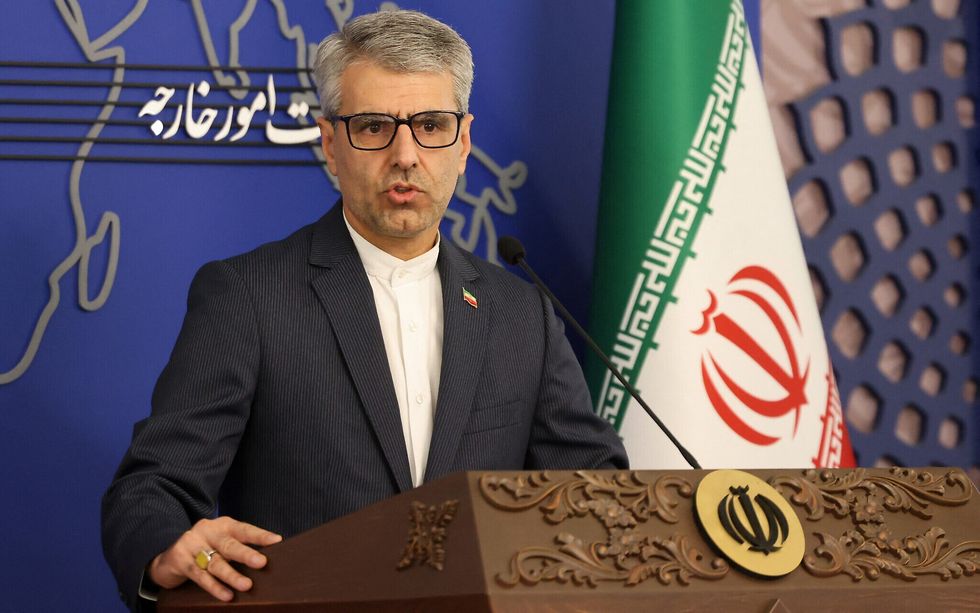
Iran’s foreign ministry said Monday it had called for an end to the war across the region, the lifting of the US naval blockade and the release of frozen assets in its counter-proposal to Washington.
Ministry spokesman Esmaeil Baqaei, speaking at a weekly press briefing, dismissed the framing of Iran’s position as unreasonable. US President Donald Trump rejected the proposal, calling it “totally unacceptable.”
What did Iran demand in its peace proposal to the US?
Iran demanded a regional ceasefire, an end to the US naval blockade and the release of assets frozen in foreign banks. “We did not demand any concessions. The only thing we demanded was Iran’s legitimate rights,” Baqaei said.
The response was delivered to Washington through Pakistani mediators and addressed both military and economic grievances Tehran has raised for years.
Why did Trump reject Iran’s counter-proposal?
Trump offered no details on the contents of Tehran’s response but stated his position plainly in a post on Truth Social. “I have just read the response from Iran’s so-called ‘Representatives.’ I don’t like it — TOTALLY UNACCEPTABLE!” he wrote. The rejection came after weeks of back-channel diplomacy brokered through Pakistan, leaving no clear path to resuming negotiations.
The rebuff sent oil prices sharply higher in early Asia trade. Brent crude rose 4.65 percent to $99.95 a barrel, while US benchmark West Texas Intermediate surged just over 4 percent to $105.50.
Iran responded by warning it would retaliate against any new US strikes and block foreign warships from the Strait of Hormuz.
What were the specific terms Iran put forward?
According to state broadcaster IRIB, Iran’s response focused on ending the war “on all fronts, especially Lebanon,” and on securing shipping routes through the Strait of Hormuz.
The Wall Street Journal, citing people familiar with the matter, reported that Iran also proposed diluting some of its highly enriched uranium and transferring the remainder to a third country, with guarantees the material would be returned if talks collapsed or Washington abandoned any agreement.
Tehran has imposed a partial blockade on the strait and established a toll mechanism for crossing ships. US officials have called Iranian control of the waterway unacceptable, given that it carries roughly a fifth of the world’s oil supply.
The strait remains a central sticking point in any potential agreement.
How has Iran’s leadership responded publicly to the standoff?
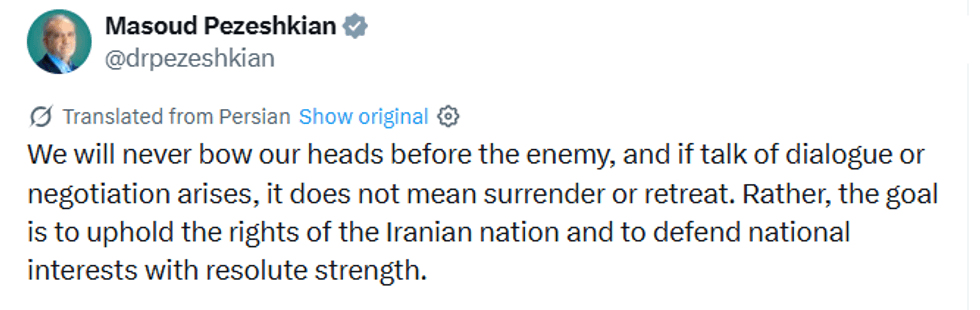
Iranian President Masoud Pezeshkian posted a firm statement on X following Trump’s rejection. “We will never bow down to the enemy, and if there is talk of dialogue or negotiation, it does not mean surrender or retreat,” he wrote.
The Islamic Revolutionary Guard Corps separately rejected the US position, saying Iran would not accept what it described as ultimatums disguised as diplomacy.
Baqaei reinforced that framing at the press briefing, insisting Iran’s demands reflected international rights rather than negotiating leverage.
Leave a Reply