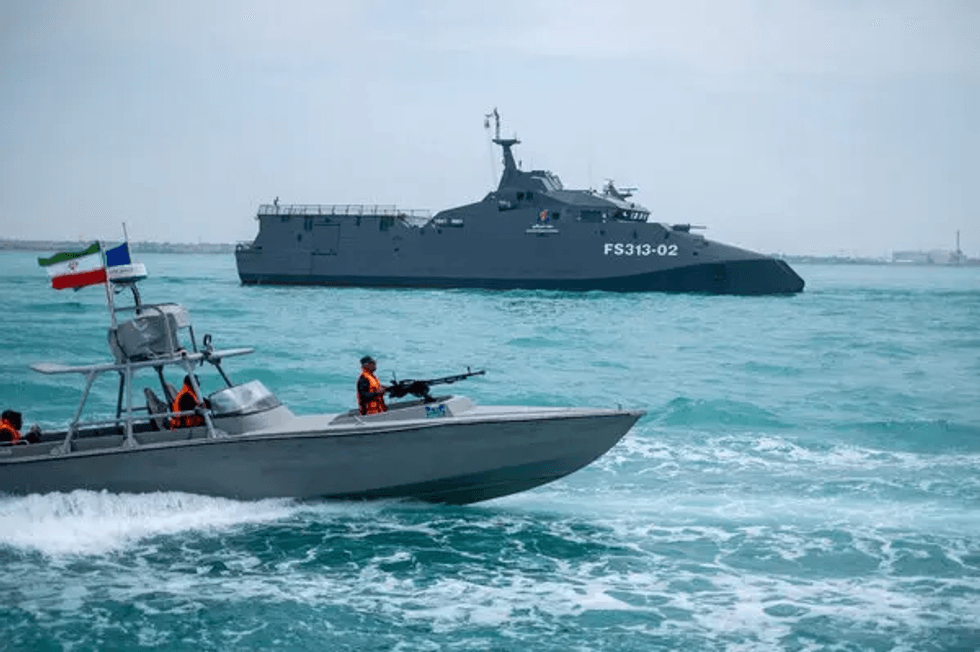
Iran’s military warned on Monday that US forces would be attacked if they entered the Strait of Hormuz, sharply escalating tensions after Washington announced plans to escort commercial vessels through the waterway.
Major General Ali Abdollahi of Iran’s central military command said US forces would be “targeted and attacked” if they approached the strait.
The warning came hours after President Donald Trump announced Project Freedom, a naval escort initiative he described as a humanitarian effort for stranded crews.
What did Iran’s military say about US forces entering the Strait of Hormuz?
Iran’s joint military command said any foreign armed forces, particularly US forces, would be attacked if they attempted to approach or enter the Strait of Hormuz.
Abdollahi stated that security of the passage falls under the authority of Iran’s armed forces, and that safe transit requires coordination with them. Tehran separately warned that any US intervention would constitute a violation of the fragile regional ceasefire that took effect on April 8.
Why is the US sending forces into the Strait of Hormuz?
Trump announced that the US would begin escorting commercial ships through the strait under an operation called Project Freedom, which he described as a humanitarian mission to support stranded crews and ensure delivery of essential supplies.
US Central Command is deploying naval destroyers, aircraft, unmanned systems and thousands of personnel to support the operation. Iranian officials dismissed the initiative as interference in sovereign waters.
The head of Iran’s parliamentary national security commission stated that any US move into the strait would be treated as a ceasefire breach.
Trump, however, insisted the escort mission was aimed purely at ensuring safe passage for commercial vessels. He also warned that any interference with US-led maritime operations would itself be met with force.
What would happen if Iran closes the Strait of Hormuz completely?
The Strait of Hormuz is one of the world’s most critical energy corridors, and its disruption has already choked flows of oil, gas and other commodities.
Hundreds of commercial vessels remain stranded in the wider Gulf region, sustaining significant pressure on global supply chains. Oil prices have remained well above pre-crisis levels since the standoff began.
Iran has maintained restrictions on shipping through the route since earlier US and Israeli strikes, and the US has imposed countermeasures on Iranian maritime activity. European governments have warned of wider economic fallout from the prolonged closure.
German Foreign Minister Johann Wadephul called for the strait’s immediate reopening and urged Iran to return to negotiations, including on nuclear-related issues.
How are Iranian officials escalating their rhetoric against the US?
Mohsen Rezaei, a senior adviser to Supreme Leader, warned that Iranian forces were capable of confronting US naval assets and threatened retaliation against American carriers.
He described the strait as a potential “graveyard” for US forces. The remarks reflect an increasingly hardline tone from Iranian officials as the standoff over the waterway deepens.
Despite the escalation, Trump suggested that diplomatic channels with Tehran remained active and could still yield progress. US-Iran negotiations have stalled since the April 8 ceasefire, with control of the Strait of Hormuz the central unresolved issue. Both sides have so far refused to move on their core positions.
Leave a Reply