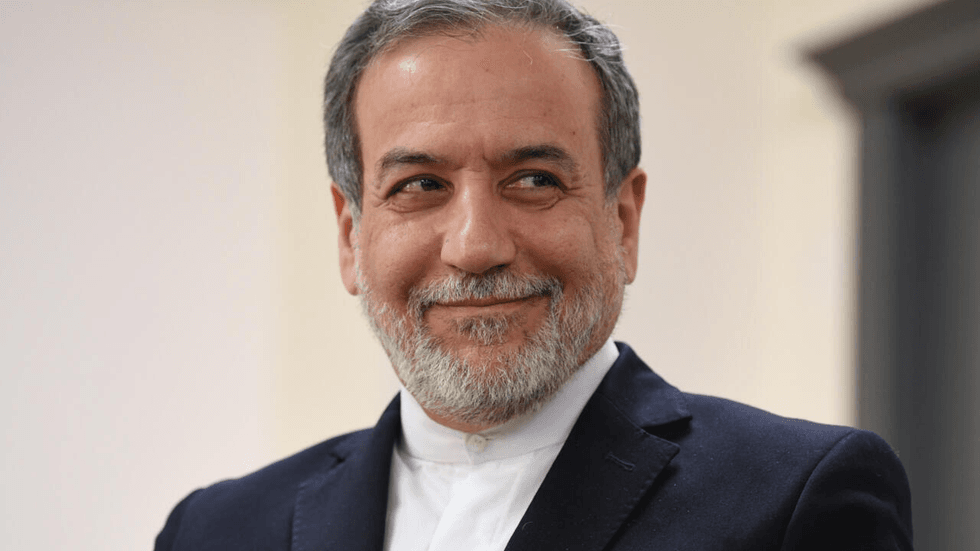
Iran’s Foreign Minister Abbas Araghchi said on Monday that Tehran had shown it was ready to take the war with Israel and the United States as far as necessary.
“I think by now they have learned a good lesson and understood what kind of nation they are dealing with, one that does not hesitate to defend itself and is ready to continue the war wherever it may lead, and take it as far as necessary,” said Araghchi during a weekly foreign ministry briefing.
His remarks come amid U.S. efforts to rally allies to reopen the Strait of Hormuz, a critical passage for global oil supplies, as Japan and Australia indicated they have no plans to send naval vessels to escort ships.
The U.S.-Israeli war on Iran has entered its third week, creating turbulence across the Middle East and unsettling global energy markets. On Sunday, President Donald Trump insisted that countries relying on Gulf oil have a responsibility to protect the strait, which handles roughly 20% of the world’s energy transit.
Asian markets responded cautiously, with Brent crude rising over 1% to above $104.50, while regional equities mostly weakened amid fears of further disruptions to oil supplies.
Trump emphasized the stakes, telling reporters aboard Air Force One, “I’m demanding that these countries come in and protect their own territory because it is their territory. It’s the place from which they get their energy.” He noted that his administration had reached out to seven countries, naming China, France, Japan, South Korea, Britain, and others as potential contributors.
Despite Trump’s appeals, Japanese Prime Minister Sanae Takaichi, citing her country’s war-renouncing constitution, said Monday that Japan has no plan to dispatch naval ships. “We are continuing to examine what Japan can do independently and what can be done within the legal framework,” she told parliament.
Australia, another key U.S. security ally in the Indo-Pacific, echoed the reluctance. “We know how incredibly important that is, but that’s not something that we’ve been asked or that we’re contributing to,” Cabinet member Catherine King told ABC.
Trump also warned he might delay his scheduled visit to Beijing if China does not assist in reopening the strait, noting that the country relies on it for 90% of its oil imports. The Chinese foreign ministry has not yet commented.
Pressure on European allies is also mounting. Trump cautioned that NATO faces a “very bad” future if members fail to support the United States. European Union foreign ministers are meeting Monday to discuss enhancing a limited naval mission in the Middle East, though an extension to the Strait of Hormuz is not expected. Meanwhile, British Prime Minister Keir Starmer and Canadian Prime Minister Mark Carney have discussed reopening the strait, and South Korea is reviewing the U.S. request.
The conflict has disrupted global air travel, with key Middle Eastern hubs including Dubai, Doha, and Abu Dhabi partially closed, forcing airlines to cancel thousands of flights. Jet fuel shortages are emerging as well, with Vietnam preparing for potential flight reductions after China and Thailand halted exports.
The ongoing conflict has also underscored the risks of fossil fuel dependency. “Fossil fuel dependency is ripping away national security and sovereignty, and replacing it with subservience and rising costs,” Simon Stiell, Executive Secretary of the U.N. climate change arm UNFCCC, said ahead of a Brussels meeting with EU officials.
Although some Iranian and foreign vessels have continued to cross the strait, most tanker traffic remains blocked following U.S. and Israeli attacks on February 28. Israel has also conducted strikes in Lebanon and Gaza against Hezbollah and Hamas positions, while limited ground operations have begun in southern Lebanon.
Drone attacks continue to pose threats. Dubai authorities contained a fire at a fuel tank after a drone strike but temporarily suspended airport flights. Saudi Arabia intercepted 34 drones in its eastern region within one hour. No injuries were reported in either incident.
Despite U.S. predictions that the war could end within weeks, Iran insists it is stable and prepared to defend itself. “We have never asked for a ceasefire, and we have never asked even for negotiations,” Araghchi told CBS’ “Face the Nation” program on Sunday. “We are ready to defend ourselves for as long as it takes.”
Leave a Reply