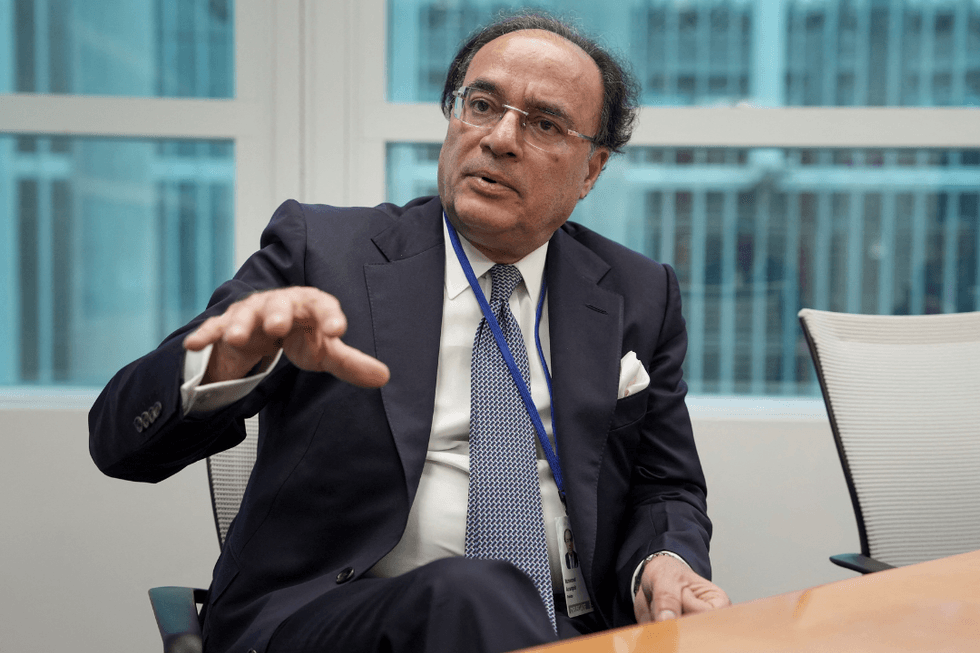
Pakistan’s finance minister signaled a possible increase in petroleum product prices in the coming days, citing rising global costs and supply challenges, while government officials defended recent energy policies during a briefing to a parliamentary committee.
Finance Minister Muhammad Aurangzeb said the government is practicing austerity measures on the instructions of Prime Minister Shehbaz Sharif but acknowledged that fuel prices may still rise.
“We are implementing savings and austerity measures under the prime minister’s directives,” Aurangzeb said. “However, petroleum product prices are likely to increase in the coming days.”
During the same session, Petroleum Division Minister Ali Pervaiz Malik briefed the committee on the country’s energy supply situation, highlighting structural and market challenges facing Pakistan’s oil sector.
Malik said Pakistan currently operates five oil refineries, most of which are outdated. He added that Saudi Arabia continues to supply crude oil to Pakistan on concessional terms, providing some relief to the country’s energy imports.
He also revealed that two oil tankers carrying crude destined for Pakistan were stuck in the Strait of Hormuz, underscoring ongoing logistical pressures on supply chains.
“Discussing crude oil prices while sitting on television is easy,” Malik said, noting that crude oil must undergo a refining process before it can be used domestically.
The minister said global diesel prices have fluctuated sharply in recent days, rising from $88 per barrel on March 1 to about $149 per barrel on March 6. He added that shipping costs have also surged, with cargoes that previously cost about $700,000 now costing nearly $7 million.
Malik said the government has taken steps to ensure gas supply, particularly during Ramadan. Authorities are working to guarantee gas availability during the pre-dawn meal (sehri) and evening meal (iftar).
He also said liquefied petroleum gas (LPG) imports from Iran have increased and that contingency plans are in place if demand for LPG rises further.
During the discussion, Senator Farooq H. Naek questioned the justification for higher fuel prices, asking who benefits from the increases.
“A large segment of Pakistan’s population is poor and cannot bear a PKR 55 increase,” Naek said.
Responding to the criticism, Malik said no government official takes pleasure in raising prices for the public but argued that the decisions are driven by economic realities and international market pressures.
Leave a Reply