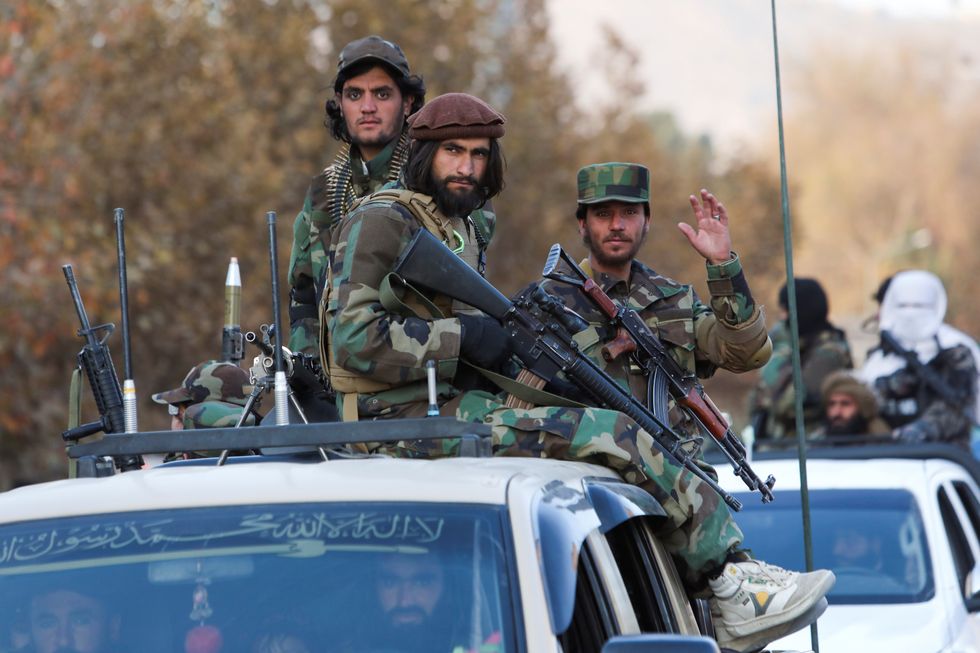
The European Commission confirmed Monday it plans to invite Taliban officials to Brussels for talks on returning Afghan migrants to Afghanistan. A letter is to be sent “imminently” to Kabul to arrange a date.
The visit, coordinated with Sweden, would follow two trips by European officials to Afghanistan on the same issue.
Why is the EU inviting Taliban officials to Brussels?
The EU is inviting Taliban officials to Brussels to resolve practical and diplomatic obstacles to returning Afghan migrants, particularly those with criminal convictions. Around 20 EU member states are backing the push. A technical meeting already took place in Kabul in January 2026, and Brussels would be the follow-up.
What would the Taliban visit to Brussels involve?
EU officials are working on a “potential follow-up meeting at technical level” with Afghanistan’s de-facto authorities, a European Commission spokesperson confirmed. No specific date has been set. To enter Belgium, which hosts the EU institutions, Taliban representatives would need to be granted exemptions, something Belgian authorities appear, in principle, prepared to allow.
The Taliban have been largely isolated internationally since returning to power in 2021 and imposing a strict version of Islamic law. The EU does not formally recognise the Taliban as a government. Talks at this level raise both practical and ethical questions about engagement with an unrecognised authority.
How many Afghan migrants are in Europe?
EU countries received around one million asylum applications from Afghans between 2013 and 2024, with roughly half approved, according to the bloc’s data agency. In 2025, Afghans still accounted by far for the largest share of asylum applicants across the EU. The scale of Afghan migration has made the question of returns one of the most politically charged in European immigration policy.
As public sentiment on migration has hardened, European governments have moved to scale back protections and explore return arrangements. Germany has deported more than 100 Afghans with criminal convictions since 2024, via charter flights facilitated by Qatar. Attitudes in the country have been further hardened by a string of deadly attacks carried out by Afghans in recent years, including a car-ramming in Munich last year.
Which EU countries are pushing for Afghan deportations?
Around 20 EU member states signed an October letter urging the EU to find diplomatic and practical ways to advance Afghan returns. Austria has already hosted a Taliban delegation in Vienna, in mid-September. Belgium and Sweden are among those looking to follow a similar approach, with strong support from migration hawks within the bloc.
What are the humanitarian concerns about returning migrants to Afghanistan?
Critics have sharply condemned the returns drive. “Deporting Afghans back to a country where almost half of the population cannot feed themselves is not a migration policy; it is a decision that could cost lives,” said Lisa Owen, the International Rescue Committee’s country director for Afghanistan. Migrant rights groups have also warned that a Taliban visit to Brussels could allow officials to identify individuals they want returned, potentially putting those people’s fundamental rights at risk.
The humanitarian backdrop is severe. Since 2023, more than five million Afghans have returned from Iran and Pakistan, often forcibly, with most living in extreme hardship without stable housing or employment. Several diplomatic sources contacted by AFP said the Brussels meeting is primarily intended to resolve practical issues, including how to issue travel documents to people whose Afghan embassies in Europe are not recognized by the Taliban authorities.
Leave a Reply