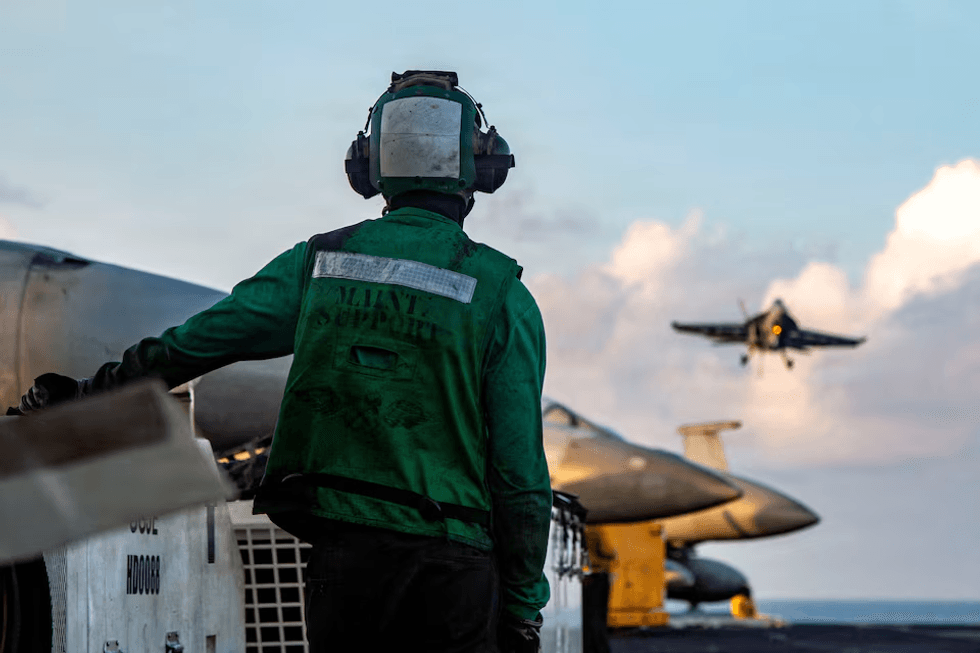
Iranian forces are searching for a missing U.S. pilot after two American warplanes were downed over Iran and nearby Gulf waters, according to officials from both sides, while two other airmen have been rescued.
The incidents highlight the mounting dangers facing U.S. and Israeli aircraft operating over Iran, despite repeated assurances from Washington that it maintains dominance in the air. With the conflict now in its sixth week, the possibility of an American pilot stranded inside Iranian territory has added a new layer of urgency and political pressure for the United States.
Iranian officials said their forces brought down a two-seat F-15 fighter jet, while U.S. officials confirmed that a pilot from an A-10 ground-attack aircraft ejected after the plane was hit. Search operations are underway in southwestern Iran, where authorities have called on locals to assist in locating the missing pilot, even offering recognition for those who help detain “hostile عناصر.”
U.S. officials said recovery efforts are ongoing, though details remain scarce. Two Black Hawk helicopters involved in the search reportedly came under fire but managed to exit Iranian airspace. The condition of those on board has not been disclosed.
The aircraft losses have been seized upon by Iranian leaders as a propaganda victory, with officials framing the downings as evidence of shifting momentum in the conflict. Public reactions in Iran reflected that narrative, with state figures suggesting the war’s focus had moved from strategic objectives to direct confrontations with U.S. personnel.
At the same time, diplomatic efforts appear to have stalled. Iran has signaled it is unwilling to engage in proposed talks with U.S. officials in Islamabad, according to media reports, dealing a blow to mediation attempts led by regional players.
The conflict, which erupted on February 28 following joint U.S. and Israeli strikes, has already killed thousands and sent shockwaves through global energy markets. U.S. Central Command says 13 American service members have died so far, with hundreds more wounded.
Beyond the battlefield, the war is increasingly spilling across the region. Iran has launched missiles and drones toward Israel and targeted infrastructure in Gulf states aligned with Washington, raising fears of a wider escalation.
Recent days have seen strikes hit critical facilities, including power and water infrastructure in Kuwait, while debris from intercepted attacks has landed in urban areas such as Dubai. Authorities across the Gulf have warned of the vulnerability of essential systems, particularly desalination plants that supply drinking water.
The conflict has also extended to Lebanon, where Israel has intensified strikes against Iran-backed Hezbollah positions, and to southern Iran, where aid facilities have reportedly been hit.
Markets have reacted sharply to the uncertainty. Oil prices surged earlier this week amid concerns over supply disruptions, reflecting growing anxiety that the conflict could have long-term consequences for the global economy.
With no clear diplomatic breakthrough in sight and military operations continuing on multiple fronts, the situation remains volatile, with the search for the missing pilot symbolising the increasingly high stakes of the الحرب.
Leave a Reply