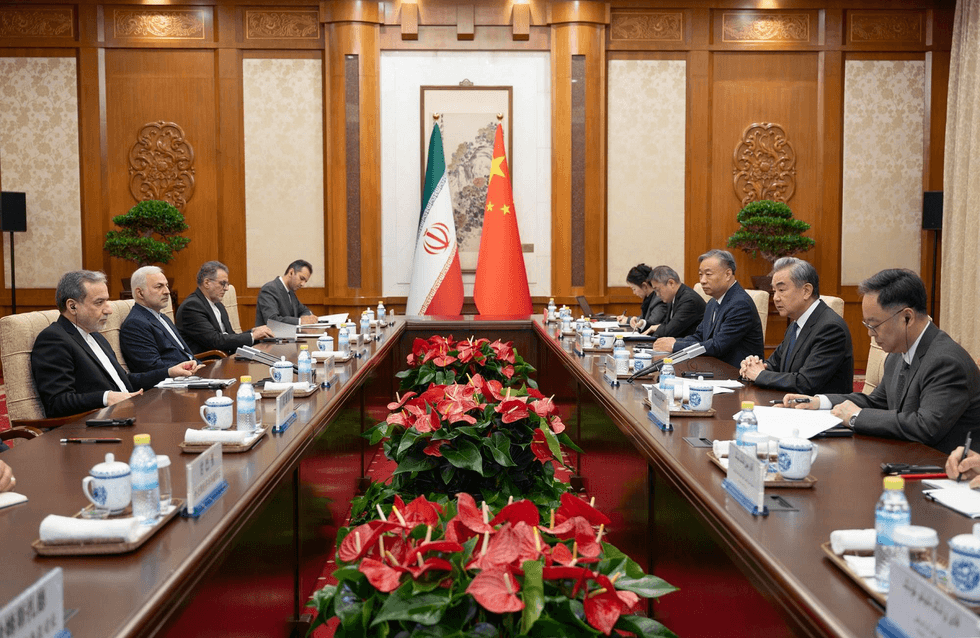
China’s Foreign Minister Wang Yi called Wednesday for a complete and immediate end to hostilities in the Middle East, during talks in Beijing with Iranian counterpart Abbas Araghchi.
Wang also urged the United States and Iran to reopen the Strait of Hormuz to shipping as soon as possible. The meeting came as Washington signalled a potential easing of its own military posture in the region.
What is China’s position on the Iran war and Strait of Hormuz?
China is calling for an immediate ceasefire, warning that restarting hostilities is unacceptable and that negotiations remain essential. Wang Yi said fighting must stop “without delay” and that the Strait of Hormuz must be reopened and protected to ensure normal shipping.
Beijing has also warned against a protracted war and urged the international community to prevent the conflict from spreading further.
Why did Iran’s foreign minister visit Beijing?
Araghchi’s visit to Beijing comes at a diplomatically significant moment, ahead of Trump’s planned trip to China on May 14-15 for talks with President Xi Jinping. China is a major buyer of Iranian oil and has maintained ties with Tehran despite US sanctions aimed at cutting its revenue.
Beijing has positioned itself as a constructive diplomatic actor throughout the conflict, which began with US-Israeli strikes on Iran in late February.
Wang’s remarks also came as Trump announced the United States would temporarily pause its naval operation escorting commercial ships through the Strait of Hormuz, citing progress toward a possible agreement with Iran. Trump described the pause as a short-term step to allow space for negotiations, but confirmed that a US blockade of Iranian ports would remain in place.
What has the US said about the Strait of Hormuz?
Secretary of State Marco Rubio said Washington had completed its offensive operations against Iran, while warning of a strong response to any further threats to shipping in the strait.
Rubio accused Iran of threatening global trade through its actions in the waterway and said Washington and its allies are pursuing a UN Security Council resolution to address maritime security concerns. The naval escort operation, dubbed “Project Freedom” by Trump, had drawn Iranian warnings asserting control over the strait.
What is the current state of US-Iran negotiations?
A fragile ceasefire took effect on April 8, but recent days have seen renewed friction. Iran fired missiles and drones at US forces, while Washington said it struck Iranian vessels it accused of threatening commercial shipping. Talks remain stalled, with tensions around the Strait of Hormuz and Iran’s nuclear program central to the deadlock after two months of conflict.
Both sides have offered cautious diplomatic signals alongside firm warnings. Iranian President Masoud Pezeshkian said Tehran remained open to dialogue but rejected US maximum pressure demands.
Pentagon chief Pete Hegseth said the United States was “not looking for a fight,” though warned any further escalation would draw a strong response. The conflict has continued to weigh on global oil markets, with prices extending losses on Wednesday amid ongoing uncertainty.
Leave a Reply