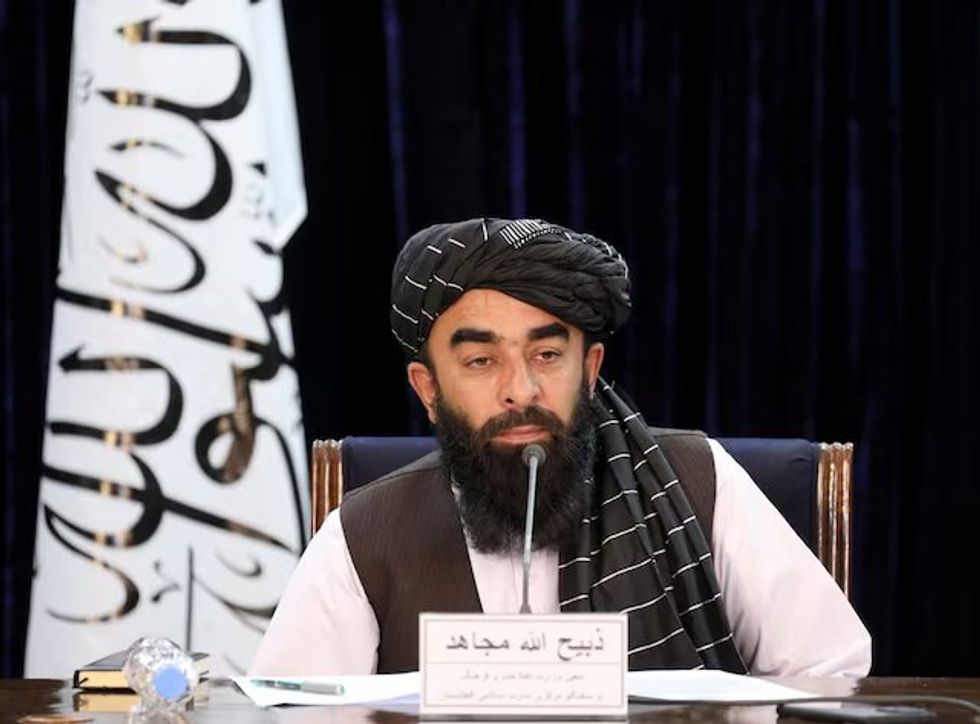
Afghanistan’s Taliban government vowed Tuesday to respond after overnight border strikes it blamed on Pakistan that killed 10 people, escalating tensions a day after a suicide bombing in Peshawar.
Taliban spokesman Zabihullah Mujahid said on X that Pakistani forces bombed the home of a civilian in Khost province, killing nine children and a woman.
He said airstrikes also hit border areas in Kunar and Paktika, injuring four more civilians in attacks carried out by drones and aircraft, according to local officials.
In Jige Mughalgai, a village near the frontier, residents sifted through debris from a collapsed home as families prepared graves for the victims.
Mujahid said the Taliban condemns the strikes and insisted Afghanistan has the right to defend its territory and people, warning that an answer will come “at the right time.”
Pakistan’s military did not comment when contacted by reporters.
The strikes followed a suicide blast on Monday targeting the headquarters of Pakistan’s paramilitary Federal Constabulary in Peshawar. Three officers were killed, and 11 were wounded.
No group claimed responsibility, but state broadcaster PTV reported the attackers were Afghan nationals. President Asif Zardari blamed what he called “foreign-backed Fitna al-Khawarij,” Islamabad’s term for the Tehreek-e-Taliban Pakistan, or TTP, which it accuses of using Afghan soil for operations.
A separate suicide bombing in Islamabad earlier this month killed 12 people and was claimed by a Pakistan Taliban faction that shares the Afghan Taliban’s ideology.
Pakistan said the cell involved in the capital attack was guided by militant leaders based inside Afghanistan.
Truce under strain
Relations between Pakistan and Afghanistan have deteriorated sharply since the Taliban returned to power in 2021, worsening after border clashes in October that left about 70 people dead on both sides.
The clashes ended with a truce brokered by Qatar and Turkey, but negotiations in Doha and Istanbul failed to yield a durable deal. The two sides remained divided over security demands, especially Pakistan’s insistence that Kabul curb TTP fighters operating in Afghan territory.
Pakistan accuses Afghanistan of sheltering militants responsible for a surge in attacks, including the TTP, which has waged an insurgency against the Pakistani state for years. Kabul denies the charges and claims Pakistan harbors groups hostile to Afghanistan.
Meanwhile, the Pakistan-Afghanistan Joint Chamber of Commerce and Industry warned that thousands of shipping containers remain stalled at the border, each accumulating steep daily fees. The group called the economic pressure unbearable for traders already struggling with delays.
Leave a Reply