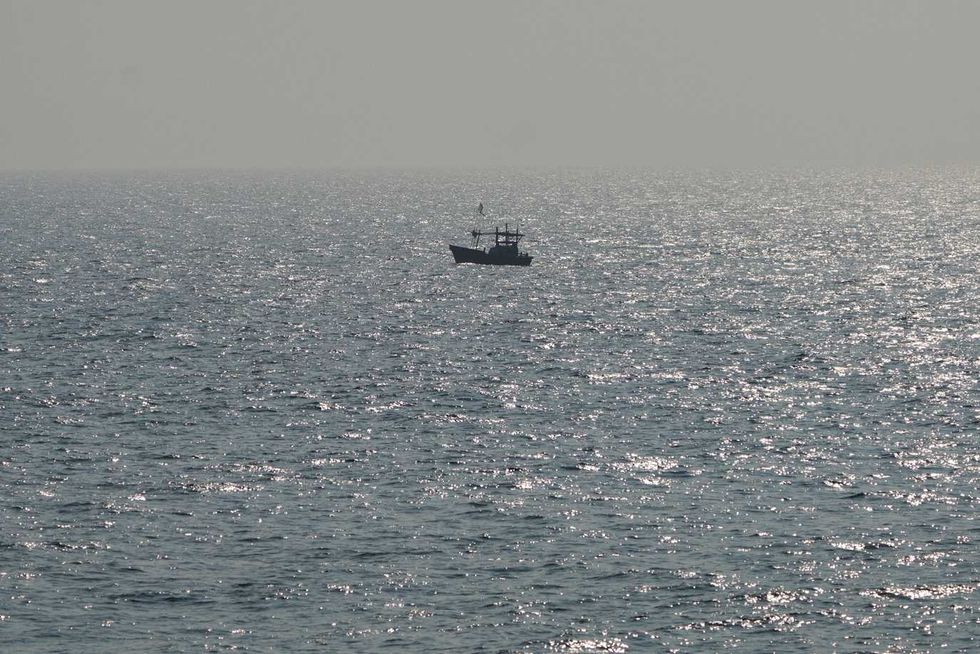
Iranian Foreign Minister Abas Araghchi accused the United States of committing an atrocity by sinking an Iranian navy ship near Sri Lanka, warning Washington it would “bitterly regret” setting a dangerous precedent.
“The US has perpetrated an atrocity at sea, 2,000 miles away from Iran’s shores. Frigate Dena, a guest of India’s Navy carrying almost 130 sailors, was struck in international waters without warning,” Araghchi said in a post on X.
“Mark my words: The US will come to bitterly regret precedent it has set.”
Sri Lanka said it is taking action to safeguard lives on another Iranian ship off its coast. The vessel was in the country’s economic zone, beyond territorial waters, the cabinet spokesperson said Thursday.
“We are doing our utmost to safeguard lives,” spokesperson Nalinda Jayatissa said, highlighting concerns over the safety of Iranian crews in the region.
Rising civilian toll
At the same time, regional air strikes by U.S. and Israeli forces have claimed at least 1,000 civilian lives in Iran, sending millions across the Middle East into bomb shelters. The conflict, now in its sixth day, shows no sign of abating after congressional efforts in Washington to halt U.S. military action were blocked.
According to the U.S.-based Human Rights Activists News Agency (HRANA), 1,097 civilians have died and more than 5,000 were injured since the wave of air strikes began on February 28. The strikes also killed Iran’s Supreme Leader Ayatollah Ali Khamenei along with senior military and political officials.
In Washington, Republican senators rejected a motion to require congressional authorization for the air campaign, leaving President Donald Trump with broad discretion. The Senate vote split along party lines, 53 to 47, with most Republicans opposing and most Democrats supporting the motion.
Regional escalation
The conflict has now expanded across the Middle East. A U.S. submarine sank an Iranian warship off Sri Lanka on Wednesday, killing at least 80 personnel. Meanwhile, NATO air defenses intercepted a ballistic missile launched from Iran toward Turkey. The missile was reportedly intended for a base in Greek Cyprus but veered off course, according to a Turkish official.
Iran has continued retaliatory strikes, warning of possible destruction to military and economic infrastructure across the region. U.S. Defense Secretary Pete Hegseth said there was no immediate threat of triggering NATO’s collective-defense clause despite Turkey’s involvement, NATO’s second-largest military.
Economic and civil disruptions
The conflict is also disrupting global trade, particularly shipping through the Strait of Hormuz. At least 200 vessels remain anchored off the coast, as President Trump pledges naval escorts and insurance to contain rising costs. U.S. Energy Secretary Chris Wright said the Navy will escort oil tankers “as soon as it can,” while current efforts focus on neutralizing Iranian threats.
Markets have reacted to the instability: Asian shares rose Thursday after recent losses, while U.S. stocks posted gains Wednesday on speculation of a potential end to hostilities. Tehran dismissed reports that Iranian intelligence contacted the CIA to explore a resolution as “psychological warfare,” according to semi-official news agency Tasnim.
International Monetary Fund Managing Director Kristalina Georgieva warned that a prolonged conflict could strain global economic resilience, affecting energy prices, market sentiment, growth, and inflation worldwide. Governments have launched repatriation flights to evacuate citizens stranded in the region, though some, including a British flight from Oman, were delayed due to security concerns. Commercial air traffic remains largely suspended across major Gulf hubs, including Dubai.
Khamenei’s funeral postponed
Plans for a state funeral for Ayatollah Khamenei, 86, remain in doubt following his assassination by Israeli forces. Iran announced that the three-day farewell ceremonies had been indefinitely postponed, with no new date set.
Mojtaba Khamenei, the son of the slain supreme leader, was reportedly not in Tehran when the attack occurred. The Assembly of Experts is expected to announce a new leader soon, though candidates remain undisclosed. Israel has warned it will target the new leader once selected. Other potential successors include Hassan Khomeini, the grandson of the Islamic Republic’s founder and a leading figure of the reformist faction.
Leave a Reply