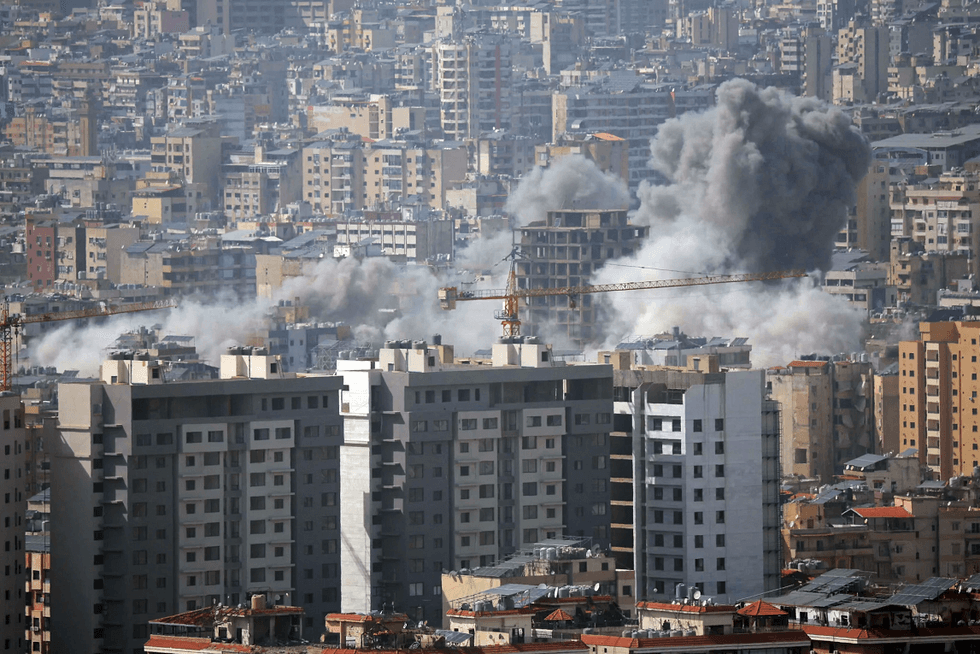
The United States, Iran, and a group of regional mediators are negotiating the terms of a potential 45-day ceasefire that could pave the way for a permanent end to the war, Axios reported.
While the outlet said chances for a partial deal within the next 48 hours remain slim, officials described the effort as the only opportunity to prevent a dramatic escalation, which could include large-scale strikes on Iranian civilian infrastructure and retaliatory attacks on energy and water facilities in Gulf states.
Trump extends deadline, warns of strikes
President Donald Trump extended his previous deadline by 20 hours, setting a new target of Tuesday at 8 p.m. EST (Wednesday 3:30 a.m. in Iran, 4:00 a.m. in the UAE and 5:00 a.m. in Pakistan), speaking to Axios that the U.S. was “in deep negotiations” and that a deal could be reached.
“There is a good chance, but if they don’t make a deal, I am blowing up everything over there,” he added.
Negotiations reportedly involved Pakistani, Egyptian, and Turkish mediators, alongside direct communications between U.S. envoy Steve Witkoff and Iran’s Foreign Minister Abbas Araghchi.
The proposed arrangement envisions a two-phase plan: an initial 45-day ceasefire followed by a permanent resolution. Mediators have emphasized that reopening the Strait of Hormuz and addressing Iran’s highly enriched uranium program can only be secured through a final agreement.
Iran has signaled it does not want a “Gaza or Lebanon situation,” where a ceasefire exists only on paper. Meanwhile, the Islamic Revolutionary Guard Corps (IRGC) navy has insisted the situation in the Strait of Hormuz “will never return” to its pre-war state.
Iran launches new attacks amid escalating tensions
On Monday, Iran launched fresh attacks across the Middle East, threatening “devastating” retaliation following Trump’s expletive-laden warning that Tehran must reopen the Strait of Hormuz. Israel, Kuwait, and the UAE reported barrages of missiles and drone strikes early in the day.
Tehran’s central military command warned of “much more devastating” retaliation if civilian targets are hit, coming hours after Trump threatened to destroy Iranian infrastructure, demanding compliance to reopen Gulf shipping lanes. “Open the Fuckin’ Strait, you crazy bastards, or you’ll be living in Hell,” Trump declared on Sunday. In a follow-up post, he set a new deadline of Tuesday, 8 p.m. EST (0000 GMT Wednesday).
US airman rescued amid rising violence
The conflict intensified as a U.S. airman was rescued after his fighter jet went down inside Iran. Images released by Iranian media showed wreckage of several aircraft, but Tehran did not deny the U.S. rescue operation, which involved American special forces racing against Iranian troops to extract the officer from mountainous terrain.
Trump hailed the rescue on Truth Social, promising a news conference. According to The New York Times, the officer carried a pistol, a beacon, and secure communications to coordinate with rescuers. Two aircraft intended for extraction were destroyed inside Iran to prevent capture, while three others successfully carried out the operation. Iranian media reported five casualties during the mission and claimed to have destroyed four U.S. aircraft, while Washington has not confirmed these claims.
Gulf states under fire
Gulf nations faced renewed Iranian attacks from Sunday into Monday. Kuwait reported intercepting missiles and drones, while the UAE said its air defences engaged incoming threats over Sharjah and Khor Fakkan. Israel also detected a fresh wave of Iranian missiles targeting its territory.
UAE Presidential Adviser Anwar Gargash warned Tehran that attacks on Arab neighbors “will actually concretize the American role” and confirmed the UAE is ready to “join any American-led effort, international effort to secure navigation in the Strait of Hormuz.”
Iranian media reported strikes on residential areas in Tehran and outages affecting gas supply after attacks on a university. Israel’s military said it had conducted strikes against “regime targets” in Tehran. Lebanon has also been drawn into the conflict, with Hezbollah resuming attacks on Israel and Israeli forces responding in southern Lebanon. UN peacekeepers warned that ongoing clashes near their positions “could potentially draw return fire.”
Oil prices rose amid the conflict, with U.S. benchmark West Texas Intermediate up 1.86% to $113.62 a barrel and Brent crude above $110. Russia condemned Trump’s threats, urging Washington to abandon “the language of ultimatums” and return to negotiations, according to Russian Foreign Minister Sergei Lavrov’s call with Iran’s counterpart.
In Tehran, daily life continued despite the tensions, with young Iranians exercising, flying kites, and picnicking in parks. Meanwhile, Pope Leo XIV used his first Easter blessing as pontiff to appeal to leaders to “choose peace” amid the escalating war.
Security analyst Danny Citrinowicz said that “the prospect of a negotiated agreement with Iran, at least under current conditions, is close to nonexistent,” highlighting the challenges facing mediators in the critical hours ahead.
Leave a Reply