A widening rift between the United States and Europe over the future of Ukraine threatened to overshadow a G20 summit opening Saturday in South Africa, an event already marked by President Donald Trump’s pointed absence.
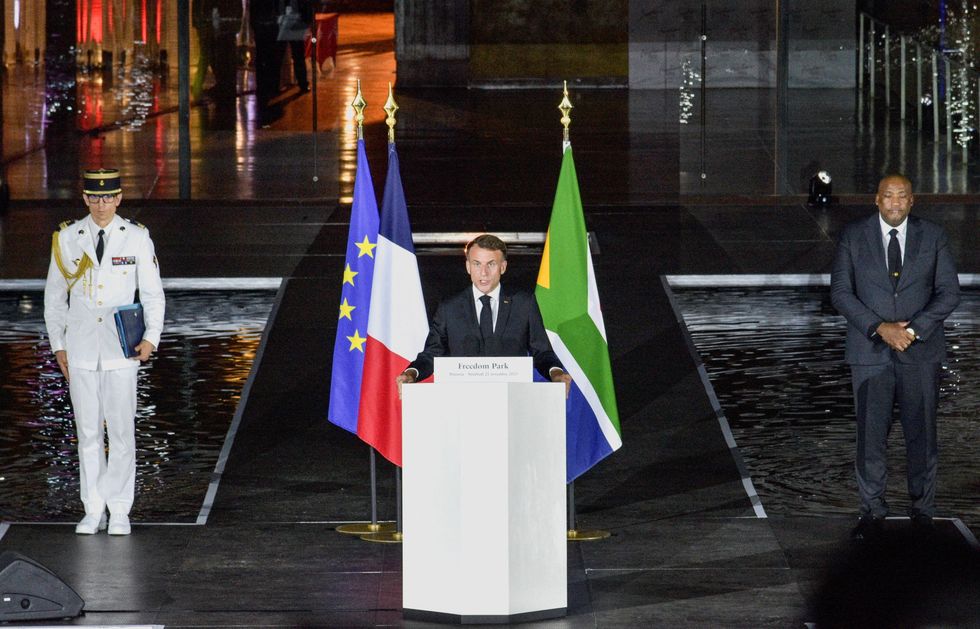
Leaders, including French President Emmanuel Macron, Indian Prime Minister Narendra Modi, Chinese Premier Li Qiang, Brazilian President Luiz Inácio Lula da Silva, and Turkish President Recep Tayyip Erdoğan, gathered in Johannesburg for the first G20 summit held on African soil.
But Trump refused to attend, with his government arguing that South Africa’s priorities — especially its push for deeper global cooperation on trade and climate action — run counter to US policy.
Still, the US president loomed large after unveiling a surprise unilateral plan to end the war in Ukraine that aligns closely with Russia’s objectives.
European backlash
Following an urgent call with Ukrainian President Volodymyr Zelensky, Macron, German Chancellor Friedrich Merz, and UK Prime Minister Keir Starmer said any peace proposal must have the “joint support and consensus of European partners and NATO allies.”
On Saturday, European leaders planned to meet on the sidelines of the summit to reinforce that “there should be nothing about Ukraine without Ukraine,” European Commission President Ursula von der Leyen said. A follow-up meeting is set for the EU–African Union summit in Angola on Monday and Tuesday.
Trump has told Ukraine it faces a limited window to accept his administration’s 28-point plan, telling Fox News Radio that “Thursday is, we think, an appropriate time.”
Climate impasse
Complicating the G20 gathering was a deadlock at the COP30 climate talks in Brazil, where nearly two weeks of negotiations were set to conclude on Friday but had spilled over amid accusations that petro-states were blocking any mention of a fossil fuel phaseout.
Despite setbacks, host South Africa voiced confidence that its priorities — reducing global inequalities, easing debt for low-income countries, securing clean-energy support, and establishing a critical minerals pact — would win backing.
“As South Africa, we are hoping that we will have the leaders’ declaration adopted, which will set a new and continuing agenda for the world, particularly the G20,” President Cyril Ramaphosa said late Friday.
Political negotiators finalized a draft joint text for leaders to consider, according to diplomats who spoke on condition of anonymity because they were not authorized to discuss its contents. It remained unclear whether the document would take the form of a traditional summit declaration, given the US boycott and Washington’s warning that no statement should be issued in the G20’s name.
Boycott tensions
Ramaphosa, who bristled at Trump’s absence and the administration’s unfounded claims of a “white genocide” in South Africa, joined other leaders in emphasizing the importance of multilateral engagement.
“Multilateralism is our best, maybe our only defense against disruption, violence, and chaos. And South Africa put multilateralism to work,” European Council President Antonio Costa said at a pre-summit news conference.
The boycott echoes Trump’s decision not to send an official delegation to COP30. Washington said it would send only its chargé d’affaires at the end of the Johannesburg meeting for a handover ceremony, as the United States prepares to host next year’s summit at a Trump-owned golf club in Florida.
The G20 comprises 19 countries plus the European Union and the African Union, representing 85 percent of global GDP and about two-thirds of the world’s population.
Leave a Reply