Pakistan’s Interior Minister Mohsin Naqvi departed for an official visit to Tehran on Wednesday, his second trip to the Iranian capital this week, as Islamabad intensifies diplomatic efforts to revive stalled talks between Iran and the United States.
Iran’s official IRNA news agency cited diplomatic sources in Islamabad confirming the visit.
What role is Pakistan playing in Iran-US diplomacy?
Pakistan has positioned itself as the primary intermediary in efforts to resume Iran-US negotiations.
The visit is expected to focus on facilitating a resumption of dialogue between Washington and Tehran, alongside discussions on regional stability and security cooperation.
Islamabad has also relayed revised Iranian peace proposals to Washington in an effort to prevent negotiations from collapsing entirely.
What is Mohsin Naqvi expected to discuss in Tehran?
Naqvi is expected to meet senior Iranian officials to discuss border management, counterterrorism cooperation and bilateral trade.
The talks are also likely to cover people-to-people connectivity and mechanisms to strengthen diplomatic engagement between the two neighbors.
Pakistani sources said Islamabad is maintaining close consultations with regional stakeholders as diplomatic activity intensifies.
What has Mohsin Naqvi done in Tehran so far?
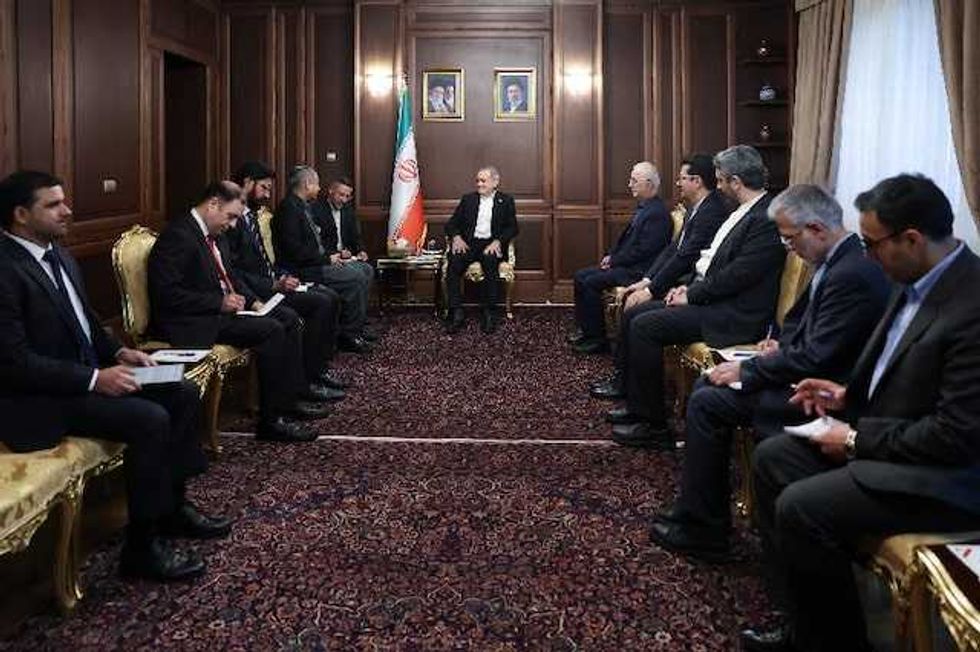
During his first visit earlier this week, Naqvi met Iranian President Masoud Pezeshkian for talks lasting around 90 minutes, as well as Iran’s interior minister.
The meetings were described as high-level consultations, with Pakistan acting as a go-between for two countries that do not maintain direct diplomatic contact on the nuclear file. A second visit within days signals the pace of shuttle diplomacy has intensified.
What is the current state of Pakistan-Iran relations?
Pakistan-Iran relations are at an active stage, with Islamabad deepening engagement on multiple fronts alongside the mediation effort. Deputy Prime Minister and Foreign Minister Ishaq Dar met Ambassador-designate Imran Ahmed Siddiqui on Tuesday ahead of his posting in Tehran, reaffirming Pakistan’s intent to broaden ties. Dar described the two countries as bound by deep-rooted historical, cultural and fraternal ties.
What did Iran’s Revolutionary Guards threaten if the US resumes attacks?
Iran’s Revolutionary Guards warned Wednesday that any resumed aggression against Iran would trigger a regional war spreading far beyond the Middle East.
The warning was published on the Guards’ website Sepah News and came after President Donald Trump gave Tehran a deadline of days to reach a deal before potentially ordering new strikes. A ceasefire has been in place since April 8.
The Guards stated that Iran had not yet deployed the full capabilities of the Islamic revolution, despite facing what they called the world’s two most expensive armies. The statement cautioned that the “American-Zionist enemy” should not mistake the ceasefire for a sign of Iranian weakness. Iran’s Foreign Minister Abbas Araghchi reinforced the warning on X, writing that a return to war “will feature many more surprises.”
What is Trump’s deadline for striking Iran again?
Trump told reporters Tuesday that Washington could resume strikes within days if no deal was reached. “I’m saying two or three days, maybe Friday, Saturday, Sunday, something, maybe early next week, a limited period of time,” he said.
He added that Gulf Arab leaders had asked him to hold off on an attack at the eleventh hour.
Trump framed the pause as a negotiating tool, suggesting Iran was keen to reach a settlement. Iran and many observers dispute that characterization, pointing to Tehran’s leverage through its control over the Strait of Hormuz. Both sides have continued exchanging proposals even as their public statements have grown sharper.
What has the war with Iran cost so far?
The nearly 40-day war killed top Iranian leaders, including Supreme Leader Ayatollah Ali Khamenei, and triggered retaliatory missile and drone attacks by Tehran across the region.
Official US cost estimates have exceeded $30 billion to date, straining American weapons stockpiles and raising questions about military readiness.
The ceasefire that took hold on April 8 has held, but both sides have maintained a posture of military readiness throughout.
Leave a Reply