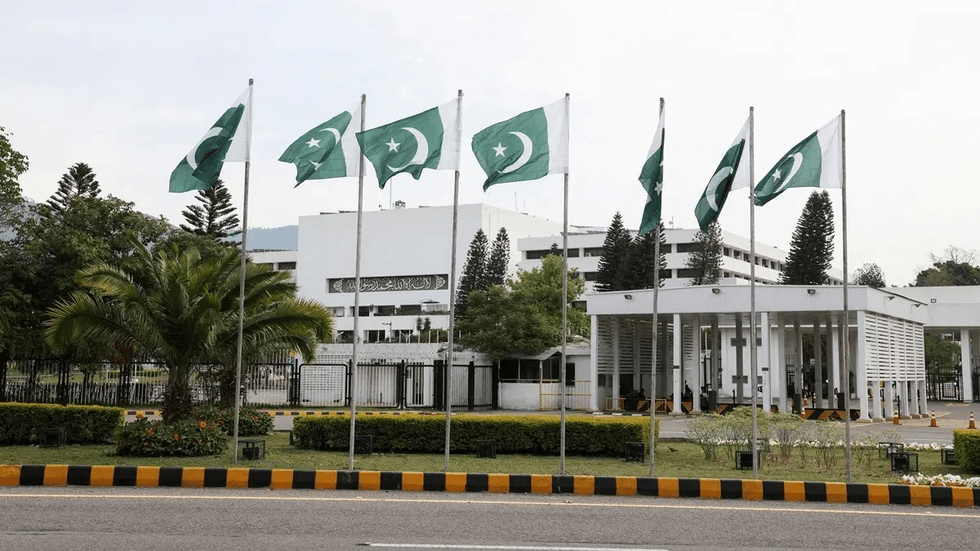
US Secretary of State Marco Rubio voiced hope of progress in ending the war with Iran on Thursday, pointing to Pakistani mediators as a key force in advancing negotiations.
A ceasefire on April 8 halted fighting launched weeks earlier by the United States and Israel, but talks have so far failed to produce a lasting agreement.
What role is Pakistan playing as a mediator in the Iran war?
Pakistan is acting as a go-between in US-Iran negotiations, ferrying proposals between the two sides and hosting direct talks.
In April, Pakistan hosted the only face-to-face negotiations between US and Iranian officials since the war began on February 28. Army chief Asim Munir helped mediate those talks. Despite that breakthrough, no permanent deal has been reached.
What has Rubio said about Pakistan’s mediation efforts?
Rubio told reporters on Thursday that Pakistani officials were expected to travel to Tehran, expressing cautious optimism about the outcome.
“I believe the Pakistanis will be travelling to Tehran today. So hopefully that’ll advance this further,” he said. Pakistan’s interior minister Mohsin Naqvi, considered close to Munir, had visited Iran for the second time in a week on Wednesday.
Iranian media, citing unnamed sources, had reported that Munir himself could visit Tehran as early as Thursday. Pakistan’s authorities offered no comment on any travel plans for the army chief.
Beijing, meanwhile, confirmed that Prime Minister Shehbaz Sharif would travel to China on Saturday, a country also involved in mediation efforts.
Why is Trump warning that talks are on the ‘borderline’?
President Donald Trump used unusually blunt language on Wednesday to signal how fragile the negotiations remain. “It’s right on the borderline, believe me,” he told reporters. “If we don’t get the right answers, it goes very quickly. We’re all ready to go.” He said a deal could come “very quickly” or “in a few days,” but warned Iran would need to provide “100 percent good answers.”
Though open warfare across the Gulf has reduced, the impasse continues to weigh on the global economy. Rubio also criticized NATO allies for refusing to support the war effort against Iran. “He’s not asking them to commit troops. He’s not asking them to send their fighter jets in. But they refuse to do anything,” Rubio said.
What is Iran’s position in the negotiations?
Tehran’s chief negotiator Mohammad Bagher Ghalibaf warned Washington on Wednesday of a “forceful response” if Iran were attacked again.
“The enemy’s movements, both overt and clandestine, show that despite economic and political pressure, it has not abandoned its military objectives,” Ghalibaf said. Iran’s foreign ministry spokesman Esmaeil Baqaei said Tehran was examining Washington’s latest proposals.
The April talks ultimately failed, with Tehran accusing Washington of making “excessive demands.” Since then, the two sides have exchanged multiple proposals, with the threat of renewed conflict persisting throughout.
Iran’s demand for the release of its frozen assets abroad and an end to a US naval blockade remain central sticking points.
Why is the Strait of Hormuz still closed after the ceasefire?
The ceasefire halted the fighting but has not reopened the Strait of Hormuz, the vital waterway that normally carries about a fifth of the world’s oil and liquefied natural gas. Iran imposed the blockade as part of its retaliation in the war, allowing only a trickle of vessels through in recent weeks while introducing a toll system. Iran’s body overseeing Hormuz has claimed its area of control extends to Emirati waters, drawing a sharp rebuke from Abu Dhabi.
The future of Hormuz remains a key sticking point in negotiations. Pre-war oil stockpiles are depleting, raising fears of wider economic pain. Hormuz also carries around a third of global fertilizer shipments, adding concerns of higher food prices and shortages if the closure continues.
Relations between Iran and the United Arab Emirates have been severely strained since the war, after Tehran launched missile and drone strikes against Gulf countries in response to US-Israeli attacks. Trump faces growing political pressure at home to find a resolution as energy costs rise.
What is happening on the Lebanon front of the war?
Lebanese state media reported that an Israeli strike on Thursday damaged a hospital in the country’s south.
Since a truce began on April 17, Israel has continued to launch strikes, carry out demolitions, and issue evacuation orders in south Lebanon, saying it is targeting Hezbollah. Lebanon’s health ministry said Israeli attacks have killed at least 3,089 people in Lebanon since March 2.
Hezbollah drew Lebanon into the wider Middle East war with rocket fire at Israel, launched in retaliation for the killing of Iran’s supreme leader in US-Israeli strikes.
The United States on Thursday sanctioned nine Hezbollah-linked individuals accused of obstructing the peace process in Lebanon.
Leave a Reply