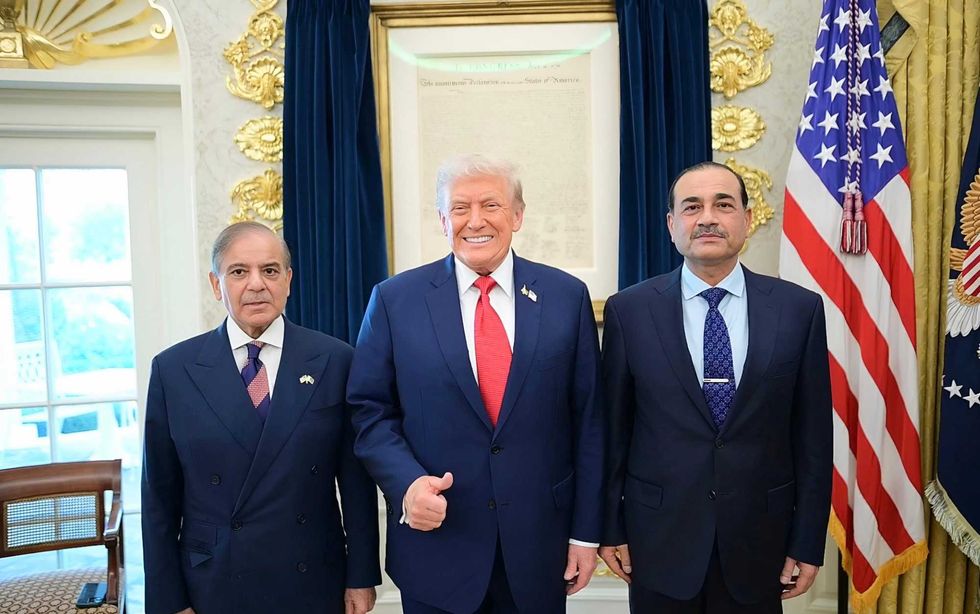
Pakistan’s Prime Minister Shehbaz Sharif said Sunday he hoped Islamabad could soon host the next round of peace talks between Iran and the United States.
The statement came after US President Donald Trump claimed a deal had been “largely negotiated,” while Iranian officials said significant gaps remained. Pakistan has served as a key mediator in negotiations since the war began Feb. 28.
What role is Pakistan playing in the Iran-US peace talks?
Pakistan has emerged as a central mediator in negotiations between Washington and Tehran.
Islamabad hosted historic face-to-face talks between the two sides and Pakistani Army Chief Field Marshal Asim Munir has been a leading figure in the diplomatic effort.
Sharif pledged Sunday that Pakistan would continue its peace efforts “with utmost sincerity.”
What did Trump say about an Iran deal?
Trump wrote on Truth Social Saturday that an agreement had been “largely negotiated,” listing Saudi Arabia, the United Arab Emirates, Qatar, Egypt, Jordan, Bahrain, Turkey and Pakistan among the parties involved. He said the deal included opening the Strait of Hormuz, which has been closed to shipping since the conflict began. Trump added that final details were “currently being discussed, and will be announced shortly.”
He also said he held a separate call with Israeli Prime Minister Benjamin Netanyahu, which he described as going “very well.”
How has Iran responded to Trump’s deal announcement?
Iranian officials pushed back on Trump’s optimistic framing. Foreign Ministry spokesman Esmaeil Baqaei acknowledged a “trend towards rapprochement” but cautioned that the two sides had not yet reached agreement on major issues. Tehran said it was finalizing a 14-point framework and hoped full details could be resolved within 30 to 60 days of that framework being completed.
Iran’s chief negotiator Mohammad Bagher Ghalibaf issued a sharp warning alongside the diplomatic signals. He said Iran’s armed forces had rebuilt during the ceasefire and that any resumption of hostilities by Washington would be “more crushing and bitter” than the opening of the war. Ghalibaf made the remarks after meeting Munir in Tehran.
What is the situation on the ground in Iran?
Weeks of negotiations have failed to produce a permanent resolution or reopen the Strait of Hormuz, leaving global oil markets under strain. The impasse has weighed heavily on ordinary Iranians. “The state of ‘neither war nor peace’ is far filthier than war itself,” said Shahrzad, a 39-year-old Tehran resident, telling AFP she feared war could resume just as she was starting a new job.
Iran’s Foreign Minister Abbas Araghchi held calls with counterparts from Turkey, Iraq, Qatar and Oman. He told UN Secretary-General Antonio Guterres that Tehran remained engaged despite what he called “repeated betrayals of diplomacy and military aggression against Iran” and excessive demands from Washington.
What is happening on the Lebanon front?
Fighting has continued in Lebanon despite an April 17 ceasefire. Lebanese state media reported Israeli strikes on the country’s south Saturday, including one that hit a Lebanese army barracks and wounded a soldier. Israel said one of its soldiers was killed Friday near the Lebanese border.
Iran-backed Hezbollah entered the war March 2 with rocket fire at Israel, following US-Israeli strikes that killed Iran’s supreme leader. Hezbollah said Saturday its chief Naim Qassem had received a message from Araghchi indicating that Iran “will not give up its support” for the group.
Leave a Reply