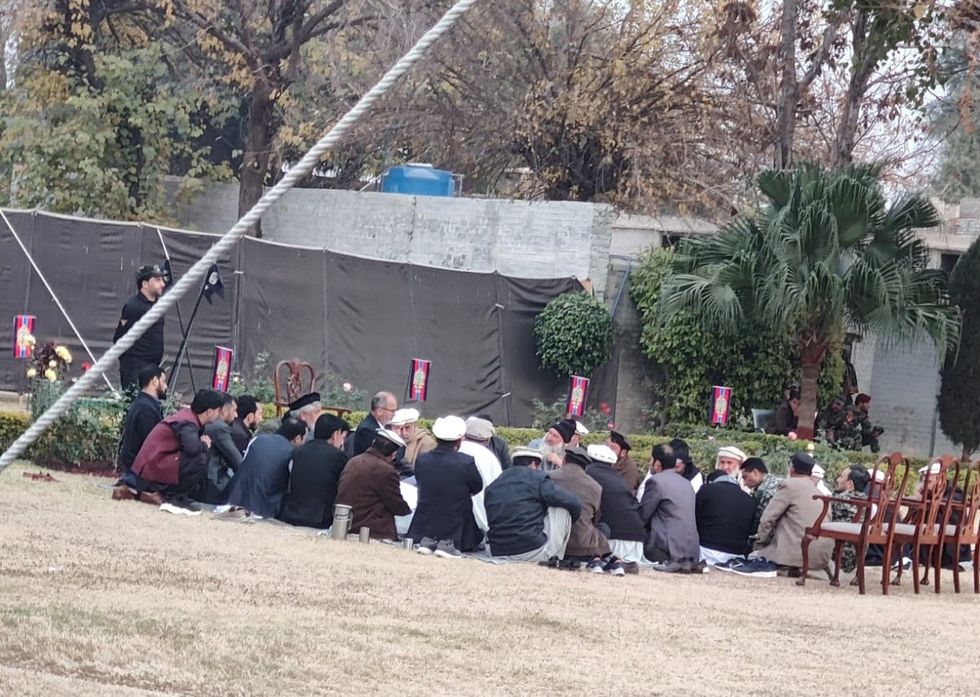
A peace deal meant to end months of sectarian bloodshed in Pakistan’s remote Kurram district appeared to unravel Monday, as two tribal leaders offered sharply contradicting accounts of how many local chiefs actually signed the agreement, while an aid convoy meant to reach 400,000 stranded residents remained blocked for the third straight day.
Former parliamentarian Sajid Turi claimed less than a quarter of tribal leaders signed the deal, directly contradicting government assertions of near-unanimous support. “The authorities lied and made it seem like the deal was reached but it wasn’t,” said Turi, a prominent Shia leader who participated in the peace negotiations.
But Haji Saleem Orakzai, a Sunni tribal chief who also participated, insisted around 90 people — 45 from each sect — had signed. “I was the second person to sign, and I saw that almost everyone signed it,” he said.
The disputed agreement, announced last week after 50 rounds of negotiations, was meant to reopen the only highway connecting Kurram to the rest of Pakistan. The road has been blocked since November following sectarian clashes that killed more than 150 people.
An aid convoy of over 80 trucks carrying food and medicine remains stalled near the town of Thal after an attack Saturday injured seven officials, including the district’s senior administrator. The convoy cannot proceed due to protests in Bagan, where residents demand compensation for 400 shops and homes allegedly destroyed in recent violence.
Turi blamed the convoy attack on the peace deal’s weakness, saying it ignored the presence of Taliban fighters in the region. “Until TTP forces are removed through a military operation, it won’t be possible to improve the situation,” he said.
Orakzai offered a different interpretation, suggesting “a third group” was trying to derail the peace process.
Meanwhile, the humanitarian crisis deepens. Local hospitals report running out of basic supplies, with helicopter deliveries suspended for two days. “If this crisis persists, the people of Parachinar may be compelled to take drastic measures, including rebellion,” said Ali Jawad, a Shia community representative.
The government has imposed emergency measures banning public gatherings and weapon displays, while announcing plans for new security checkpoints. Officials say they will either clear the route or resume helicopter deliveries by Tuesday.
Leave a Reply