The United States led a group of regional countries in calling China’s actions during a dispute over the Panama Canal a direct threat to sovereignty, prompting a sharp rebuke from Beijing on Wednesday.
The joint statement, which also included Bolivia, Costa Rica, Guyana, Paraguay and Trinidad and Tobago, came amid competing U.S. and Chinese claims over influence at the canal, a vital trade link between the Atlantic and Pacific oceans.
What is the US-China dispute over the Panama Canal about?
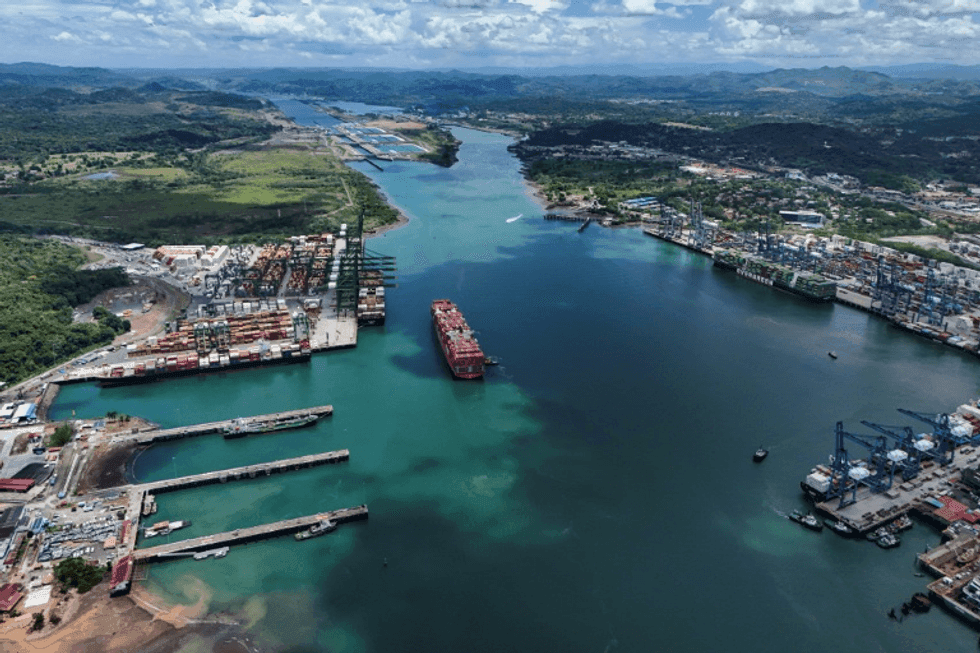
Washington and Beijing have accused each other of seeking to control the Panama Canal. The dispute escalated after Panama’s Supreme Court ordered the takeover of two canal ports previously operated by a Hong Kong-based conglomerate in January.
The United States has since alleged that China detained two Panama-flagged ships in response to that takeover.
What did the US-led joint statement on Panama say?
The joint statement described China’s actions as “a blatant attempt to politicize maritime trade and infringe on the sovereignty of the nations of our hemisphere.”
The U.S. State Department said Panama “must remain free from any undue external pressure” and warned that any attempt to undermine its sovereignty was “a threat to us all.” China threatened Panama with payback and rejected the U.S. claims before the statement was issued.
China’s foreign ministry responded sharply on Wednesday, with spokesman Lin Jian calling the statement a “smear.” “It is the United States that is politicizing and over-securitizing the port issue,” he told a news briefing. He added that Washington was “hypocritically posturing and spreading rumors and smears everywhere.”
How does the Panama Canal dispute fit into broader US-China rivalry in Latin America?
Trump returned to office vowing to reclaim U.S. control of the Panama Canal, which was handed over under a deal reached by former President Jimmy Carter.
After Panama moved against the Hong Kong-based port operator, Trump declared victory and the canal largely faded as a direct point of contention between Washington and Panama City. The latest joint statement signals renewed U.S. attention to the issue.
In a national security strategy issued last year, the Trump administration pledged to aggressively promote U.S. interests in Latin America against outside powers, with China identified as the primary challenge.
The rally of regional partners behind the Panama statement reflects that broader posture. Washington has framed the canal dispute as a test of hemispheric sovereignty rather than a bilateral U.S.-China
Leave a Reply