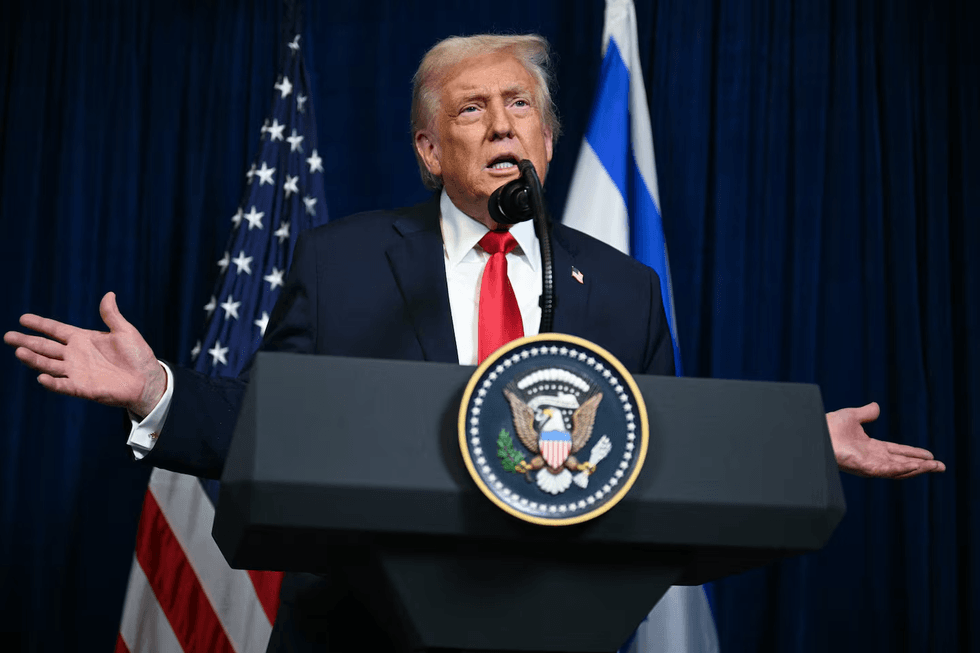
President Donald Trump hit a midnight deadline Thursday under the 1973 War Powers Resolution, requiring congressional authorization to continue military operations against Iran.
The administration, which launched strikes in late February, argued the conflict had already ended due to an April ceasefire, while Democrats warned that the president is now in clear violation of the law.
What is the War Powers Act’s 60-day deadline, and why does it matter?
The War Powers Resolution requires the president to obtain congressional authorization within 60 days of notifying Congress of military action, or begin winding down hostilities.
The clock began when Trump notified lawmakers of strikes against Iran in early March. Without authorization, the law demands a withdrawal of forces, setting up a direct constitutional clash between the White House and Congress.
Why does the Trump administration say the Iran war has ‘terminated’?
The administration argues the 60-day clock was effectively paused by a ceasefire announced in early April. A senior administration official told AFP late Thursday that hostilities that began on February 28 have since ended, pointing to the absence of any exchange of fire between the United States and Iran since the April 7 ceasefire.
Defense Secretary Pete Hegseth told lawmakers Thursday the government believes the clock “pauses or stops” during a halt in fighting.
Democrats reject that interpretation as having no basis in the law. Senate Democratic leader Chuck Schumer urged Republicans to join efforts to end the conflict, saying that once the 60-day threshold passed, there could be “no more doubts” the president was violating the War Powers Act.
What has Congress done to challenge Trump’s war authority?
Senators voted Thursday to reject a resolution aimed at curbing Trump’s authority, the latest in a series of failed Democratic attempts to force an end to the conflict. Even if such a resolution cleared the Senate, it would still require approval from the Republican-controlled House and could be vetoed by Trump.
The War Powers Act has rarely succeeded in limiting presidential war-making. Courts have generally been reluctant to intervene, leaving such disputes to the political arena.
Are any Republicans breaking with Trump over the Iran war?
Most Republicans have backed the president, but unease is growing within the party as the deadline approaches. Utah Senator John Curtis warned that continued operations require a firm constitutional footing.
“That same law is clear that after 60 days, military action must begin to wind down unless Congress provides formal authorization,” he said, adding that he would not support continued force without lawmakers weighing in.
Some Republicans have signaled they may reconsider their support if the war continues without a clear strategy or congressional authorization.
What are the broader stakes of the War Powers Act dispute?
With tens of thousands of US troops deployed in the Middle East and mounting economic and political costs at home, the dispute presents a high-stakes test of Congress’s authority over war powers, more than 50 years after the law was passed in the wake of the Vietnam War.
Senator Adam Schiff, who introduced Thursday’s failed resolution, said the 60-day mark was the moment some colleagues had cited as a potential turning point.
“After two months of war, thirteen service members’ lives lost, and billions of dollars squandered, it is time we recognized that the price we have paid is already too high,” he said.
Leave a Reply