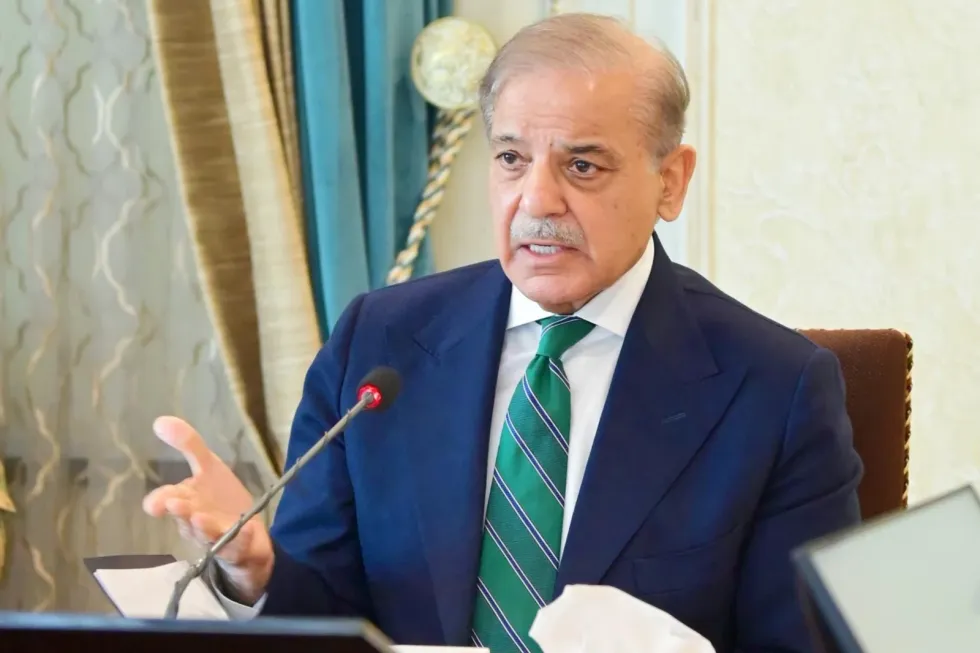
Pakistan’s Prime Minister Shehbaz Sharif, a key mediator in the war between Iran and the United States and Israel, said Wednesday he was “hopeful” the current momentum on negotiations would lead to lasting peace in the Middle East.
The statement came after US President Donald Trump announced a pause in military operations in the Strait of Hormuz, citing progress toward a deal with Tehran.
What did Pakistan PM Shehbaz Sharif say about Middle East peace?
Sharif said Pakistan is “very hopeful that the current momentum will lead to a lasting agreement that secures durable peace and stability for the region and beyond.”
He credited Trump’s decision to pause the Strait of Hormuz escort operation as a direct response to appeals from Pakistan, Saudi Arabia and other regional partners.
Why did Sharif praise Trump’s decision to pause Project Freedom?
In a post on X, Sharif said he was grateful to Trump for his “courageous leadership” in pausing the operation, known as Project Freedom.
He specifically credited Crown Prince Mohammed bin Salman of Saudi Arabia as a key voice in securing the suspension.
Pakistan, Sharif said, remains “firmly committed to supporting all efforts that promote restraint and a peaceful resolution of conflicts through dialogue and diplomacy.”
Is the Strait of Hormuz escort operation over?
The operation has been paused, not ended. Trump said the suspension is temporary, designed to allow time for a deal with Iran to be finalized and signed.
A blockade of Iranian ports, he added, will remain fully in place during this period. The operation lasted barely a day and a half before Iranian attacks threatened an already fragile ceasefire.
Why did Trump pause the Strait of Hormuz operation?
Trump said “great progress has been made” toward a comprehensive agreement with Tehran. He framed the pause as a diplomatic gesture, stating the operation would be suspended for a short period to allow the deal to be finalized.
He also said he did not want to kill more Iranians, even as the ceasefire appeared close to collapse.
The announcement came hours after Secretary of State Marco Rubio said the US had completed its offensive operations against Iran.
Rubio reserved the right to unleash a “devastating” response to any new attacks on shipping and accused Iran of “holding the world’s economy hostage” through threats to navigation and sea mine placement.
Washington and Gulf allies have drafted a UN Security Council resolution demanding Iran halt attacks and disclose the location of mines, with a vote expected within days.
What happened during Project Freedom in the Strait of Hormuz?
Iran’s Revolutionary Guards navy warned of a “firm response” if ships deviated from its approved route through the strait.
Iran fired missiles and drones at US forces on Monday. Washington said it struck six Iranian boats it accused of threatening commercial shipping, marking the sharpest escalation since a month-long truce began.
The United Arab Emirates said it intercepted a barrage of missiles and drones from Iran for a second day.
Iran categorically denied the claim, with its Khatam al-Anbiya command saying no missile or drone operation had been launched.
US Central Command General Dan Caine told reporters that forces remain ready to resume major combat operations if ordered.
What is Iran’s position on Strait of Hormuz negotiations?
Iran’s parliament speaker Mohammad Bagher Ghalibaf called the situation “intolerable” and warned that the US presence in the region “will diminish.”
President Masoud Pezeshkian said Tehran remained open to dialogue but rejected US “maximum pressure” demands as “impossible.”
Iran’s chief negotiator said Tehran “had not even started yet” in negotiations, following a spate of attacks on the crucial trade route.
Iran’s Foreign Minister Abbas Araghchi traveled to Beijing on Tuesday to meet Chinese counterpart Wang Yi on Wednesday. Talks between the US and Iran remain largely deadlocked, with only one round of direct negotiations completed.
How are global markets responding to the Hormuz crisis?
European and US stocks advanced after Trump’s pause announcement, while fears over ceasefire collapse had already weighed on Asian equities. Elevated energy costs are adding to economic strain and creating political pressure on Trump ahead of midterm elections. European allies warned that prolonged disruption would hit their economies directly.
Danish freight giant Maersk confirmed one of its ships transited Hormuz under US escort during the operation. EU chief Ursula von der Leyen said Gulf security has “direct consequences for Europe,” and leaders from Germany, France and Britain called on Iran to return to the negotiating table.
Israel’s military chief said the army remained on “high alert” and ready to respond to threats in the Gulf.
Leave a Reply