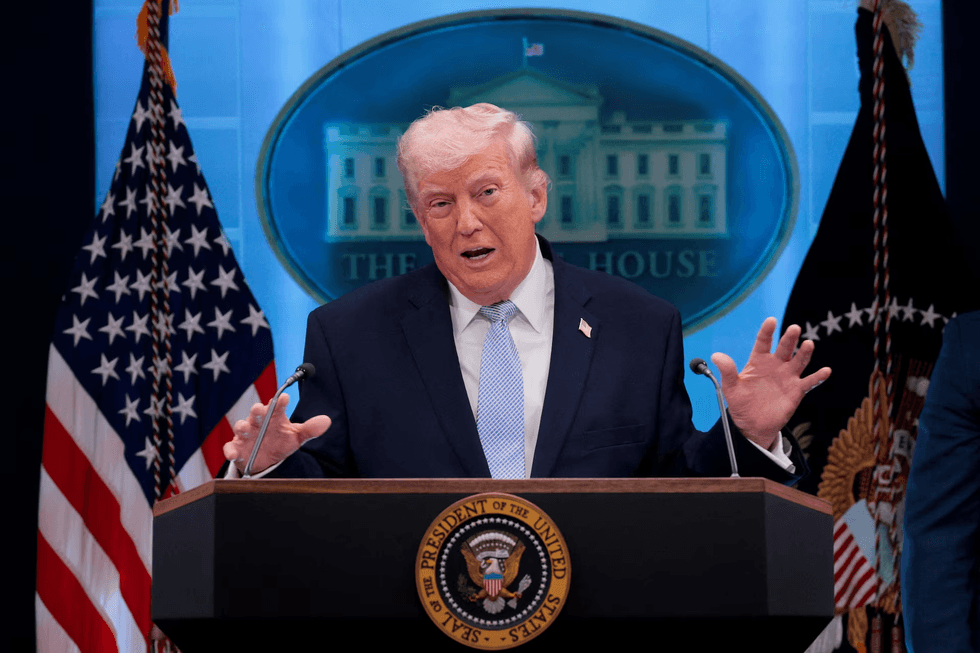
US President Donald Trump has rejected Iran’s response to Washington’s latest peace proposal, calling it “totally unacceptable.”
The rejection raises the likelihood of renewed conflict after weeks of negotiations to end the 10-week war. Iran, in turn, warned it would retaliate against any new US strikes and block foreign warships from the Strait of Hormuz.
What did Iran propose in its response to the US peace plan?
Iran’s response, passed to Washington through Pakistani mediators, focused on ending the war across all fronts, including Lebanon and on securing shipping routes.
It also proposed diluting some of its highly enriched uranium and transferring the rest to a third country, with guarantees the material would be returned if talks collapsed, according to the Wall Street Journal.
Why did Trump reject Iran’s peace proposal?
Trump offered no details on Tehran’s counterproposal but made his position clear in a post on his Truth Social platform. “I have just read the response from Iran’s so-called ‘Representatives.’ I don’t like it — TOTALLY UNACCEPTABLE!” he wrote. The rejection came despite weeks of back-channel diplomacy between the two sides.

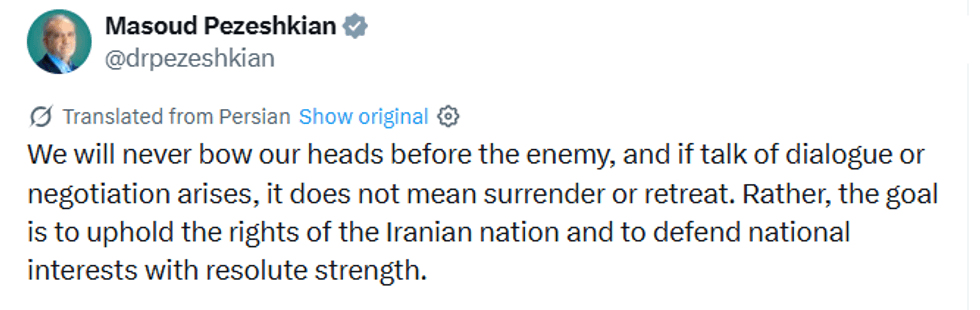
Iranian President Masoud Pezeshkian pushed back publicly the same day.
“We will never bow down to the enemy, and if there is talk of dialogue or negotiation, it does not mean surrender or retreat,” he wrote on X.
Tehran has maintained a defiant public posture throughout the negotiations, even as mediators have shuttled between capitals.
What is Netanyahu’s position on ending the war with Iran?
Israeli Prime Minister Benjamin Netanyahu, whose forces launched the war alongside the US military on 28 February, said the conflict is not over. In an interview aired Sunday on CBS’s 60 Minutes, he insisted that Iran’s enriched uranium must be removed and its nuclear facilities dismantled before a deal can be reached.
“It’s not over, because there’s still nuclear material — enriched uranium — that has to be taken out of Iran,” he said.
Netanyahu added that Trump shares his position on the uranium. Trump, however, said in a recent interview that the US could remove it “whenever we want” and that it was “very well surveilled” in its current location. Trump is expected to raise the Iran issue with Chinese President Xi Jinping during a visit to Beijing this week, given China’s role as a major buyer of Iranian oil.
What is happening at the Strait of Hormuz?
Iran imposed a blockade on the Strait of Hormuz early in the war, sending oil prices sharply higher and rattling global markets. It has since introduced a toll mechanism for ships crossing the strait. US officials have repeatedly called Iranian control of the waterway “unacceptable,” given that roughly a fifth of the world’s oil passes through it. The US Navy is separately blockading Iran’s ports, disabling or diverting ships in the process.
The impasse rattled energy markets again on Monday, with international benchmark Brent crude jumping 2.69 percent to $104.01 a barrel.
Britain and France are leading efforts to build a multinational coalition to secure the strait once a peace deal is reached. Both countries have sent vessels to the region ahead of a meeting of defense ministers from more than 40 nations, scheduled for Tuesday in London. Iran warned Sunday that any deployment by Britain or France would meet “a decisive and immediate response.” French President Emmanuel Macron later clarified that France had “never envisaged” a naval deployment, but rather a security mission “coordinated with Iran.”
What drone attacks have threatened the ceasefire?
Fresh drone strikes on Sunday added to a pattern of flare-ups straining the ceasefire. The United Arab Emirates said its air defense systems intercepted two UAVs launched from Iran. Kuwait reported dealing with hostile drones in its airspace.
A freighter arriving in Qatari waters from Abu Dhabi was struck by a drone, with Iran’s Fars news agency reporting the vessel was sailing under a US flag.
No group immediately claimed responsibility for the attacks. The spokesman for Iran’s parliamentary national security commission posted a direct warning to Washington on Sunday. “Our restraint is over as of today. Any attack on our vessels will trigger a strong and decisive Iranian response against American ships and bases,” Ebrahim Rezaei wrote.
Leave a Reply