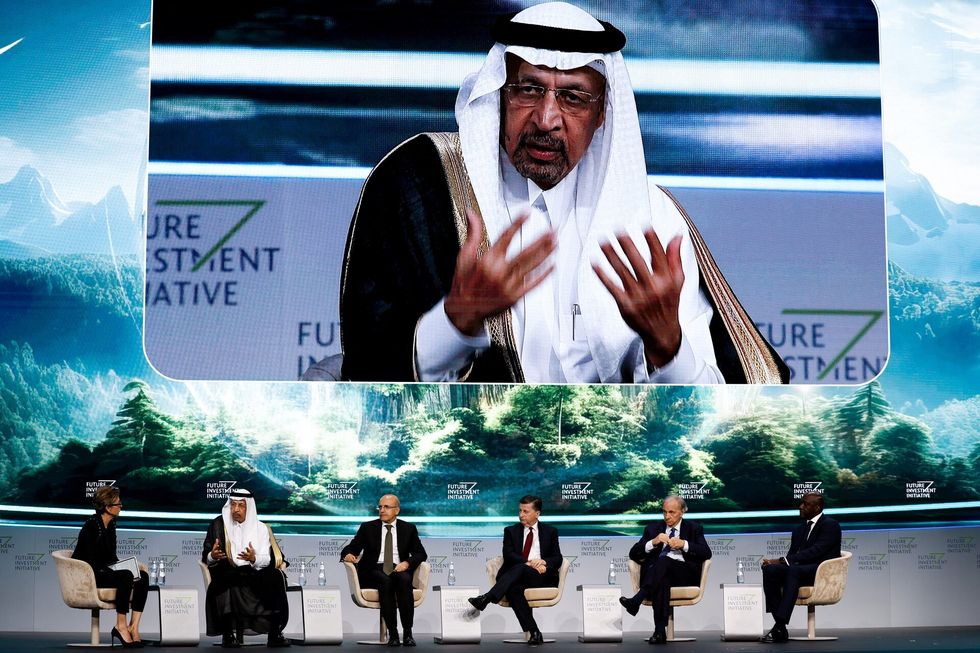
The annual Future Investment Initiative (FII) summit in Riyadh has once again brought together global business, technology, and financial leaders. This year’s gathering, held against the backdrop of mounting tensions in the Middle East and just days before the U.S. presidential election, has become a critical forum for discussions on economic strategy, technology innovation, and geopolitical stability.
Saudi Arabia’s $925 billion sovereign wealth fund and major corporations provided the foundation for attendees to build influential connections and explore investment opportunities in one of the region’s most dynamic economies. Below are key insights from some of the summit’s most prominent speakers on Tuesday.
Goldman Sachs (GS.N)
Reflecting on the economic outlook in the U.S., Goldman Sachs CEO David Solomon emphasized the significant impact of the upcoming U.S. election on monetary policy.
“It’s hard to think about monetary policy in 2025 until we get through the election and gain a clearer sense of policy direction,” he said.
Solomon also addressed inflation, suggesting it is more structurally ingrained in the global economy than commonly thought. “This doesn’t mean it will resurge in a particularly severe way,” he noted, “but depending on policy choices, it could be more of a headwind than current market consensus suggests.”
Solomon expressed optimism for a robust economic landscape in the coming years: “We are in a recovery period, and I expect to see more capital markets activity in 2025 and 2026.”
BlackRock (BLK.N)
BlackRock’s CEO Larry Fink argued for a reassessment of central bank policies, citing the delayed effect of higher interest rates in slowing economic activity, particularly due to aging populations and shifts in the housing market.
“We have greater embedded inflation in the world than we’ve ever seen,” Fink stated, underscoring the need for policymakers to adapt to these evolving economic dynamics.
Citadel
Ken Griffin shared his perspective on the upcoming U.S. presidential election, noting that while market sentiment favors a Trump victory, the outcome remains uncertain.
“We’re at peak uncertainty right now,” Griffin said. However, he expressed confidence that risk appetite in the markets would improve regardless of the election outcome, as investors are keen to move past the current political ambiguity.
Alphabet (GOOGL.O) and Google
Ruth Porat, overseeing technology investments at Alphabet and Google, highlighted the transformative potential of autonomous vehicles. She emphasized that the technology could have a substantial impact on road safety, adding, “If we want to save lives, we should be embracing autonomous driving.”
Blackstone (BX.N)
Stephen Schwarzman remarked on the gradual normalization of relations between the U.S. and China, a significant development given the strained communications of recent years.
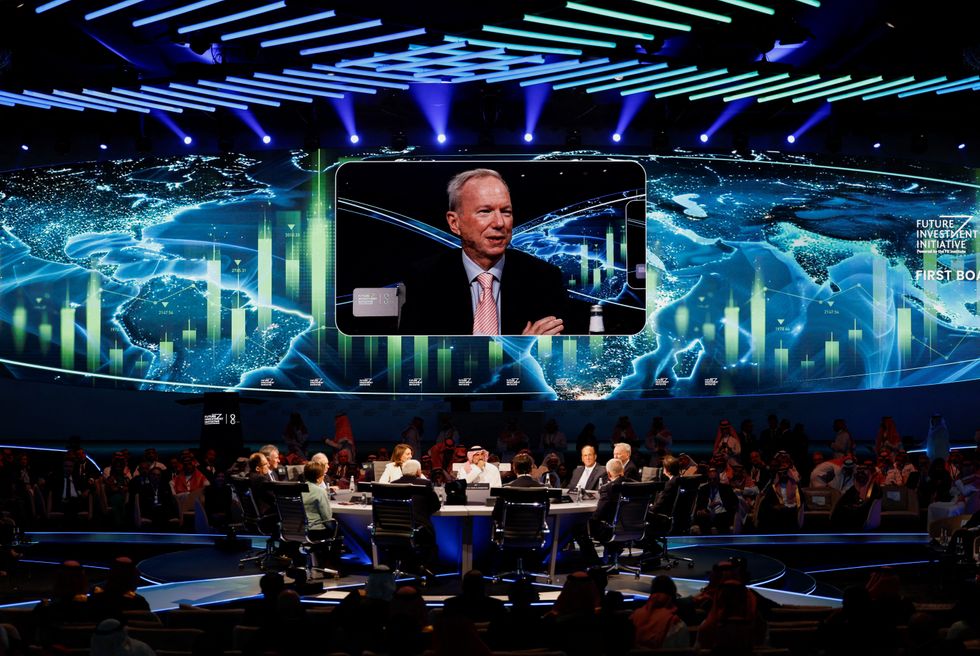
Chairman and CEO of the Blackstone Stephen SchwarzmanReuters
“Both countries are grateful that the deterioration in relations has stopped,” Schwarzman noted, pointing to a stabilized atmosphere that could lead to renewed investment and trade opportunities between the two economic giants.
Former Google CEO Eric Schmidt offered a futuristic view on warfare, proposing that technological advancements could fundamentally alter how conflicts are fought.
“If you’re a computer scientist, conventional warfare doesn’t make sense,” he stated. “Drone warfare might ultimately prevent land wars, but conflict will persist in other domains.”
Prince Abdulaziz bin Salman, Saudi Economy and Energy Minister
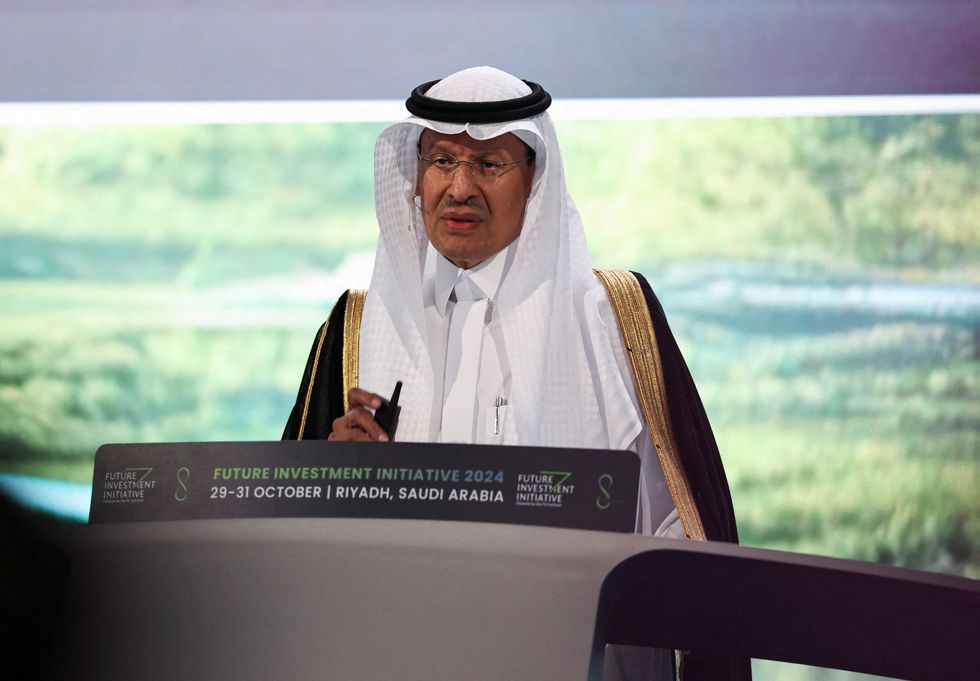
Saudi Arabia’s Minister of Energy Prince Abdulaziz bin Salman Al Saud attends the Future Investment Initiative (FII) in Riyadh, Saudi Arabia Reuters
Addressing Saudi Arabia’s energy goals, Prince Abdulaziz bin Salman delivered a clear message: “We will monetize every molecule of energy this land has, period.” His remarks underscored Saudi Arabia’s commitment to maximizing the value of its energy resources, whether conventional or renewable.
Citi (C.N)
Citi CEO Jane Fraser shared insights on the investment potential in the U.S. and Saudi Arabia, noting that American resilience and innovation remain pivotal.
“A lot of the roads do lead to the U.S. at the moment,” she said. “While you shouldn’t bet against a Saudi entrepreneur, you certainly never bet against an American one.”
As the FII summit continues, leaders from diverse industries are not only exploring collaborative investments but are also addressing pressing global issues—from inflation and economic recovery to technological transformation and geopolitical stability.
In a world marked by uncertainty, the summit serves as a testament to Saudi Arabia’s role as a significant global player and a strategic gathering point for those shaping the future of the global economy.
Leave a Reply