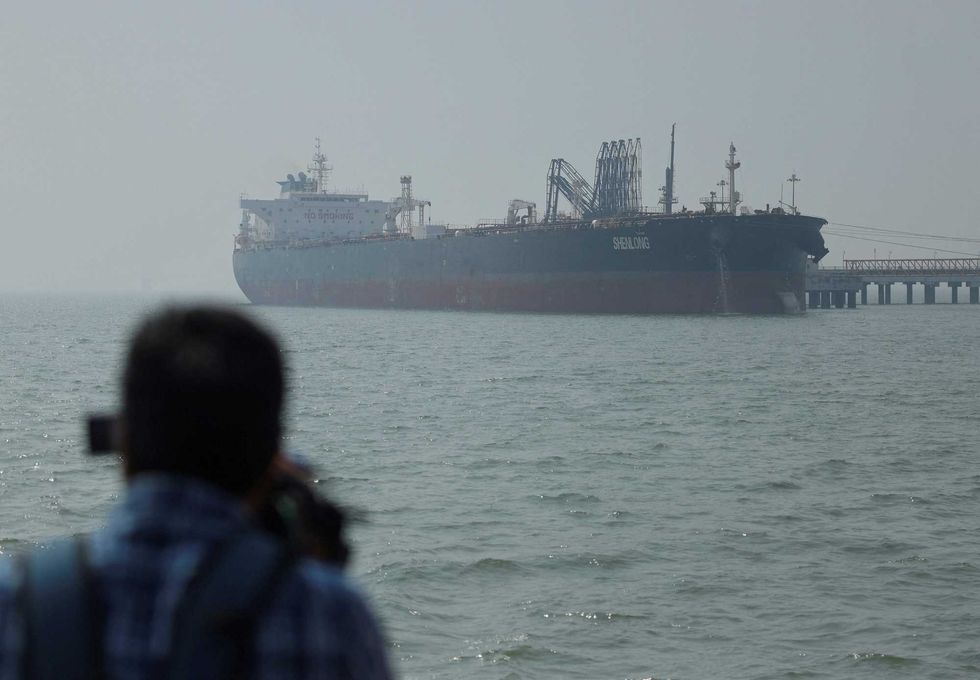
Tens of millions of people risk hunger and starvation unless fertilizers are allowed through the Strait of Hormuz within weeks, the head of a UN task force warned AFP on Monday.
Iran has blockaded the waterway since the United States and Israel launched a war on February 28, disrupting a third of the world’s fertilizer trade as planting seasons approach their end.
How does the Strait of Hormuz blockade threaten global food security?
The Strait of Hormuz normally carries a third of the world’s fertilizer supply. Iran’s blockade has sharply driven up fertilizer costs, which experts say will reduce agricultural productivity and push food prices higher.
Without a rapid resolution, the UN warns that 45 million more people could be forced into hunger, with African and Asian nations facing the sharpest impact.
What is the UN doing to get fertilizer through the strait?
UN Secretary-General António Guterres created a task force in March to establish a mechanism allowing fertilizers and related raw materials, including ammonia, sulphur, and urea, through the strait.
Jorge Moreira da Silva, executive director of the United Nations Office for Project Services (UNOPS) and leader of the task force, has since met with more than 100 countries to build support for the plan. A growing number of states have backed the mechanism, but the United States, Iran, and key Gulf fertilizer producers are not yet fully on board.
“We have a few weeks ahead of us to prevent what will likely be a massive humanitarian crisis,” Moreira da Silva told AFP in an interview in Paris. “We may witness a crisis that will force 45 million more people into hunger and starvation.” He said the UN could have the mechanism operational within seven days if political agreement were reached.
Why is the fertilizer crisis more urgent than the oil and gas disruption?
Global attention has largely focused on the blockade’s impact on oil and gas markets, but the UN has been warning that the food security threat may prove more severe. Planting seasons in several African nations end within weeks, leaving almost no time for diplomatic delay.
Even if the strait reopened immediately, Moreira da Silva cautioned, it would still take three to four months for fertilizer trade to return to normal.
Food prices have not surged sharply yet, but fertilizer costs have risen massively, a gap that experts say will close as reduced farm output works its way through supply chains. “It’s just a matter of time,” Moreira da Silva said. “If we don’t stop the origin of the crisis soon, we will have to deal with the consequences through humanitarian aid.”
What would it take to avert the Hormuz fertilizer crisis?
Moreira da Silva said moving just an average of five vessels of fertilizers and related raw materials per day through the strait would be enough to head off the worst outcomes for farmers.
The logistics are in place. What remains absent, he said, is “the political will.” The United States and Iran, along with Gulf producers central to global fertilizer supply, have yet to commit to the mechanism.
“We can’t procrastinate on what is possible to do, and what is urgent to do,” Moreira da Silva said. His message is direct: let the fertilizers cross the strait, and the risk of massive global food insecurity can still be minimized. The window to act, he added, is closing fast.
Leave a Reply