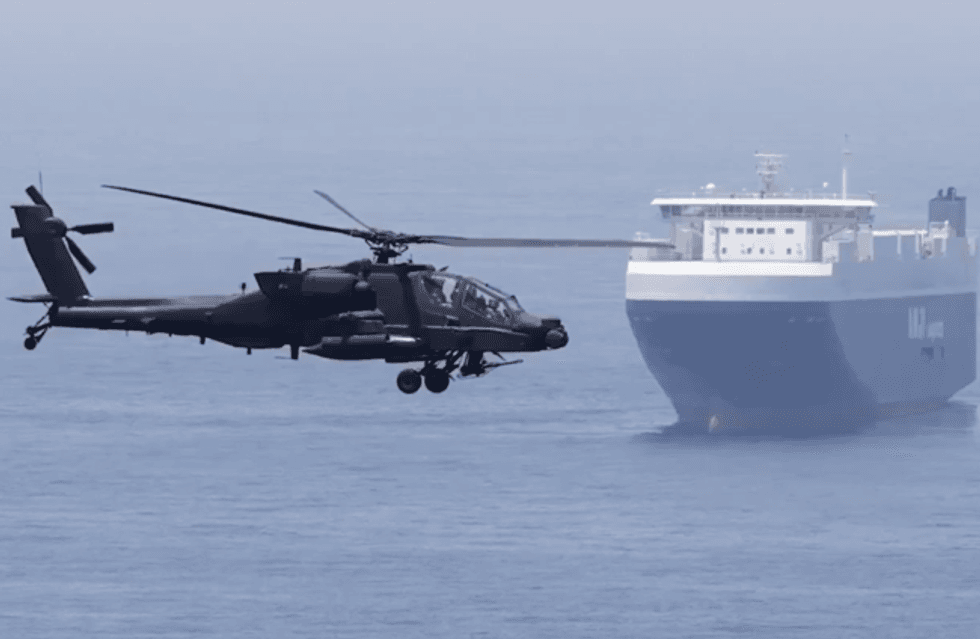
EU foreign policy chief Kaja Kallas said Tuesday the bloc could expand its Red Sea naval mission, Operation Aspides, to cover the Strait of Hormuz once the Iran war ends. Kallas made the remarks after a meeting of EU defense ministers, as Europe seeks a role in restoring shipping through the blocked waterway.
What is Operation Aspides and why could it expand to the Strait of Hormuz?
Operation Aspides is an EU naval mission launched in 2024 to protect commercial shipping in the Red Sea from Houthi attacks. Kallas said the mission already makes a crucial contribution to maritime security and that its scope could be extended to the Strait of Hormuz. Some member states have already pledged additional ships, which would support any decision to broaden the mission’s mandate.
Why is the Strait of Hormuz blocked?
Iran’s blockade of the Strait of Hormuz, through which roughly a fifth of the world’s oil and natural gas normally passes, has pushed global energy prices sharply higher. The closure stems from the US-Israel war on Iran, which has drawn retaliatory action from Tehran targeting Washington’s regional allies and disrupting one of the world’s most critical shipping routes.
Negotiations between the United States and Iran to end the conflict and reopen the waterway appear to have stalled, leaving global energy markets under sustained pressure.
What role are European countries playing in Strait of Hormuz talks?
France and Britain have led talks on a potential multinational naval effort in the region. Defense ministers from around four dozen countries were scheduled to hold a fresh round of discussions on Tuesday, reflecting the breadth of international concern over the strait’s closure.
EU defense ministers had initially rejected proposals to expand the Red Sea mission back in March, reflecting hesitation among member states about extending the bloc’s military footprint deeper into an active conflict zone. Kallas’s latest remarks suggest that position is shifting, at least in principle, as the economic pressure from the blockade mounts across Europe.
Leave a Reply