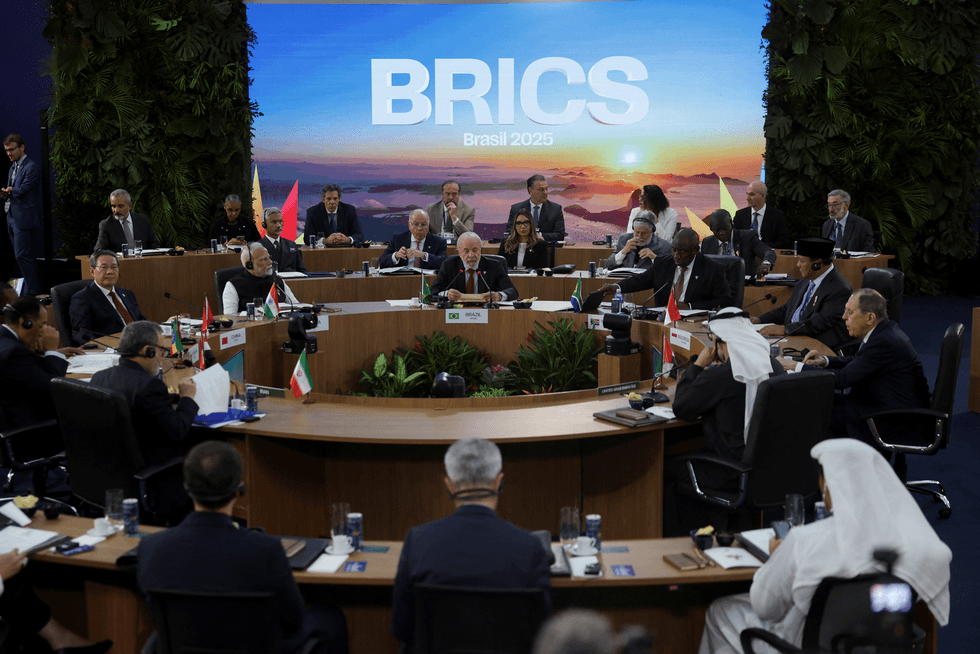
Foreign ministers from the BRICS group of nations met in New Delhi on Thursday for a two-day gathering, with the Iran war and related fuel crisis set to dominate discussions. India, which holds the BRICS chair this year, is hosting the expanded bloc, which now includes both Iran and the United Arab Emirates.
The two countries are on opposing sides of the conflict launched by the United States and Israel on February 28.
Why does the BRICS foreign ministers meeting in India matter?
The meeting comes at a moment of acute global pressure, with the Iran war driving oil price volatility and deepening divisions within the bloc. India’s foreign ministry said talks will focus on “global and regional issues of mutual interest.”
The gathering will also set the agenda for the annual BRICS leaders’ summit in September, making it a critical staging ground for the group’s collective response to the conflict.
Which world leaders are attending the BRICS meeting in New Delhi?
Iranian Foreign Minister Seyed Abbas Araghchi arrived in New Delhi late Wednesday, according to Iran’s embassy in India. Russian Foreign Minister Sergey Lavrov also attended, meeting his Indian counterpart Subrahmanyam Jaishankar on Wednesday evening after arriving in the capital.
Jaishankar said their discussions covered “trade and investment, energy and connectivity” as well as “global and multilateral issues,” adding that political cooperation was “even more valuable in an uncertain and volatile global environment.”
Foreign ministers attending the meeting are also expected to meet Prime Minister Narendra Modi, India’s foreign ministry confirmed.
How is the Iran war affecting India and the BRICS meeting?
Disruptions around Gulf shipping routes and the Strait of Hormuz have driven sustained volatility in oil and gas markets, increasing pressure on energy-importing economies. India is heavily reliant on Middle Eastern energy supplies and fertiliser imports, and the conflict has cast uncertainty over New Delhi’s growth outlook. The presence of both Iran and the UAE within the expanded BRICS bloc adds a further layer of tension to the gathering.
The bloc’s membership now includes Egypt, Ethiopia, Iran, Indonesia and the United Arab Emirates, alongside the original five members: Brazil, Russia, India, China and South Africa. Whether representatives from all member states will attend was not confirmed.
Will BRICS release a joint statement after the New Delhi meeting?
Deep divisions among some BRICS members, particularly over the Middle East war and criticism of Western powers, have cast doubt on whether a joint statement will be issued at the end of the meeting. India’s foreign ministry spokesman Randhir Jaiswal declined to confirm, saying only: “We will let you know as things progress.”
BRICS was created in 2009 as a forum for major emerging economies seeking greater influence in institutions dominated by Western powers.
The grouping has expanded significantly since then as members sought to boost its global political and economic weight. India will host a BRICS leaders’ summit later this year, with the foreign ministers’ meeting in New Delhi laying the groundwork for that gathering.
Leave a Reply